
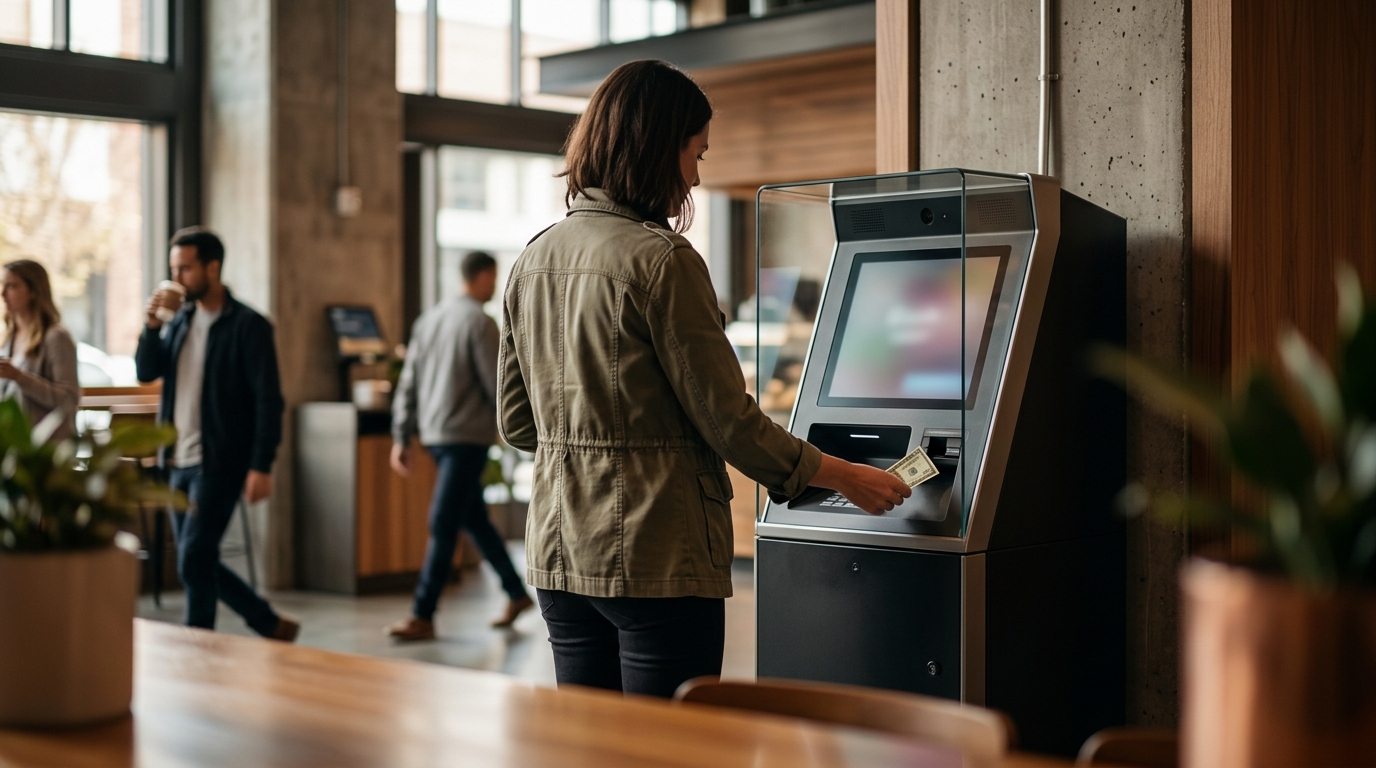
The global cryptocurrency market has expanded rapidly, with Bitcoin reaching valuations exceeding $60,000 in recent trading cycles. This growth has driven millions of users toward Bitcoin ATMs for immediate liquidity. According to recent industry data, the average fee for cash-to-crypto transactions at standalone kiosks ranges from 10% to 20%. These high costs often surprise new investors who expect bank-like transparency. Understanding these fee structures is critical for protecting your capital and maximizing your investment returns.
Understanding Bitcoin ATM Fee Structures
Bitcoin ATM fees are not standardized across the industry. Operators charge these fees to cover hardware maintenance, cash logistics, regulatory compliance, and network transaction costs. The fee is typically calculated as a percentage of the total transaction amount. For example, a 15% fee on a $1,000 purchase results in $150 in costs.
These fees are generally higher than those found on centralized exchanges. This disparity exists because ATMs provide immediate, anonymous, and cash-based access. The convenience of instant settlement comes at a premium. Users must weigh the value of speed against the cost of acquisition.
Bitcoin is a decentralized digital currency that allows peer-to-peer transactions without intermediaries. When you use an ATM, you are interacting with a machine that holds inventory. The operator must manage the risk of holding physical cash and digital assets simultaneously. This operational complexity drives the pricing model.
Byte Federal's Transparent Fee Model
Byte Federal operates a network of Bitcoin ATMs designed to balance accessibility with cost efficiency. Unlike many competitors who obscure fees until the final confirmation step, Byte Federal emphasizes transparency. Their platform allows users to view estimated fees before committing to a transaction.
The company offers a comprehensive suite of crypto services, including ATM access, digital wallets, and point-of-sale systems. By integrating these services, Byte Federal reduces overhead costs. This integration allows them to offer competitive rates compared to standalone kiosk operators.
New users can often access promotional pricing. Byte Federal currently offers a 25% discount on first purchases for qualifying accounts. This incentive significantly lowers the barrier to entry for new investors. It allows users to test the platform with reduced financial friction.
Additionally, Byte Federal provides ByteVault, a non-custodial mobile wallet. This tool enables users to manage their assets securely. Holding your own keys ensures that you retain full control over your funds. This self-sovereign approach aligns with the core philosophy of Bitcoin.
Identifying Hidden Costs in Crypto Kiosks
Beyond the visible percentage fee, several hidden costs can impact your total expenditure. Network fees, also known as gas fees, are paid to miners to process your transaction on the blockchain. These fees fluctuate based on network congestion. During peak times, these costs can spike dramatically.
Exchange rate spreads are another critical factor. Many ATMs offer a rate that is worse than the live market price. This spread is effectively a hidden fee. For instance, if the market price of Bitcoin is $60,000, an ATM might offer it at $61,500. This 2.5% difference is lost before you even hold the asset.
Transaction limits also play a role in cost efficiency. Lower limits often come with higher percentage fees. As the transaction size increases, the fee percentage typically decreases. Large investors should seek out machines that support higher limits to optimize their costs.
Regulatory compliance costs also influence pricing. Operators must adhere to strict anti-money laundering (AML) and know-your-customer (KYC) regulations. These requirements add operational overhead. Operators pass these costs on to the consumer through higher fees.
Fee Comparison: ATMs vs. Digital Platforms
Understanding where your money goes requires comparing different acquisition methods. The table below outlines the typical cost structures for various crypto acquisition channels.
| Acquisition Method | Average Fee Range | Speed of Settlement | Privacy Level |
|---|---|---|---|
| Bitcoin ATM (Byte Federal) | 5% - 15% | Instant | Medium (KYC required) |
| Standalone Crypto Kiosk | 10% - 20% | Instant | Low to Medium |
| Centralized Exchange (e.g., Coinbase) | 1% - 4% | 1-3 Days | Low (Full KYC) |
| Peer-to-Peer (P2P) Platforms | 0% - 2% | Variable | High |
As shown in the data, centralized exchanges offer the lowest fees. However, they lack the immediacy and cash-based anonymity that ATMs provide. Bitcoin ATMs occupy a unique niche for users who value speed and privacy over minimal cost.
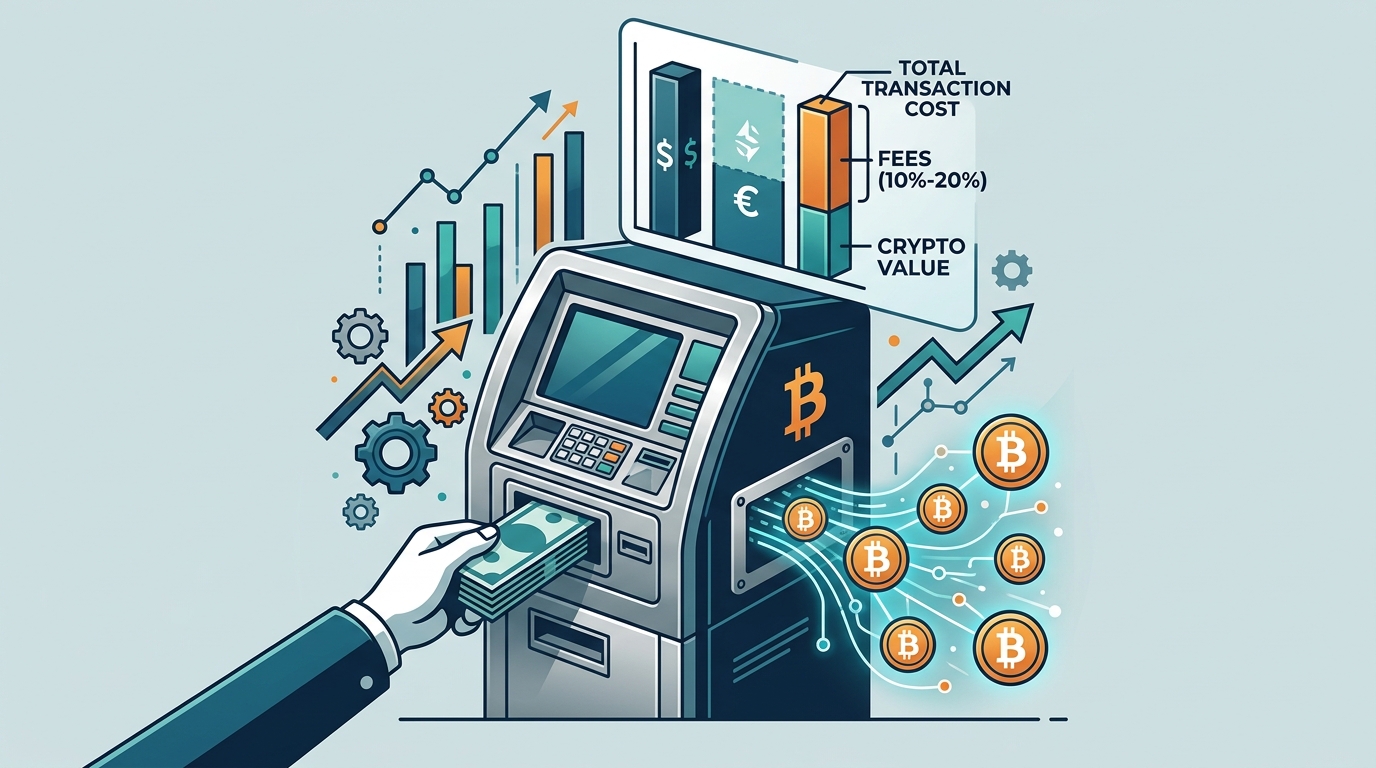
Strategies to Minimize Transaction Fees
There are several actionable strategies to reduce the cost of converting cash to cryptocurrency. First, always compare fees across different machines. Networks like Byte Federal's location finder allow you to see real-time fee estimates. Choosing a machine with a lower fee percentage can save significant capital.
Second, leverage promotional offers. Many operators, including Byte Federal, offer discounts for new users. Utilizing these offers during your first transaction can effectively halve your acquisition costs. Always check the FAQ section for current promotions.
Third, consider the transaction size. Larger transactions often benefit from tiered pricing. If you have a substantial amount of cash to invest, consolidating it into a single transaction may result in a lower overall percentage fee.
Fourth, use a digital wallet for storage. Transferring funds from an ATM to a secure non-custodial wallet immediately after purchase protects your assets. It also allows you to monitor network fees for future transfers. Avoid leaving large sums on the ATM's internal memory.
Finally, stay informed about market conditions. Network congestion can increase transaction costs. Monitoring the latest crypto news can help you time your transactions for lower network fees. This proactive approach ensures you get the best possible rate.
Key Takeaways
- Average Bitcoin ATM fees range from 10% to 20%, significantly higher than centralized exchanges.
- Byte Federal offers a 25% discount on first purchases for new users, reducing initial acquisition costs.
- Hidden costs include exchange rate spreads and fluctuating network transaction fees.
- ByteVault provides a secure, non-custodial solution for holding your Bitcoin safely.
- Comparing fees across different kiosk networks is essential for cost optimization.
- Larger transaction sizes often qualify for lower percentage fees.
- Regulatory compliance adds operational overhead, which is reflected in ATM pricing.
Frequently Asked Questions
How are Bitcoin ATM fees calculated?
Bitcoin ATM fees are typically calculated as a percentage of the total transaction amount. This percentage covers hardware maintenance, cash logistics, and network costs. The rate varies by operator and transaction size.
Can I avoid fees when buying Bitcoin with cash?
Completely avoiding fees is impossible due to operational costs. However, you can minimize them by using platforms like Byte Federal that offer transparent pricing and new user discounts. Choosing larger transaction sizes can also lower the percentage fee.
What is the difference between ATM fees and network fees?
ATM fees are charged by the kiosk operator for the service of converting cash to crypto. Network fees are paid to blockchain miners to process the transaction. Both costs apply to your total expenditure.
Is Byte Federal's fee structure transparent?
Yes, Byte Federal provides clear fee estimates before you confirm a transaction. This transparency allows you to make informed decisions. You can view these details on their official website.
How can I store my Bitcoin securely after purchase?
It is recommended to transfer your Bitcoin to a personal wallet immediately. ByteVault, Byte Federal's non-custodial wallet, allows you to hold your own keys. This ensures maximum security and control over your assets.
Are there limits on Bitcoin ATM transactions?
Yes, transaction limits depend on the specific machine and your verification level. Higher verification levels often allow for larger transactions. These limits are designed to comply with regulatory requirements.
Does Byte Federal operate in my area?
Byte Federal has a growing network of ATMs across multiple regions. You can use their location finder to find the nearest kiosk. They also offer digital services for remote access.
Start Your Secure Journey
Understanding the true cost of converting cash to cryptocurrency empowers you to make smarter financial decisions. By choosing transparent operators like Byte Federal, you can minimize fees and maximize your investment potential. Take advantage of our new user discounts today. Secure your financial future with confidence and clarity.