

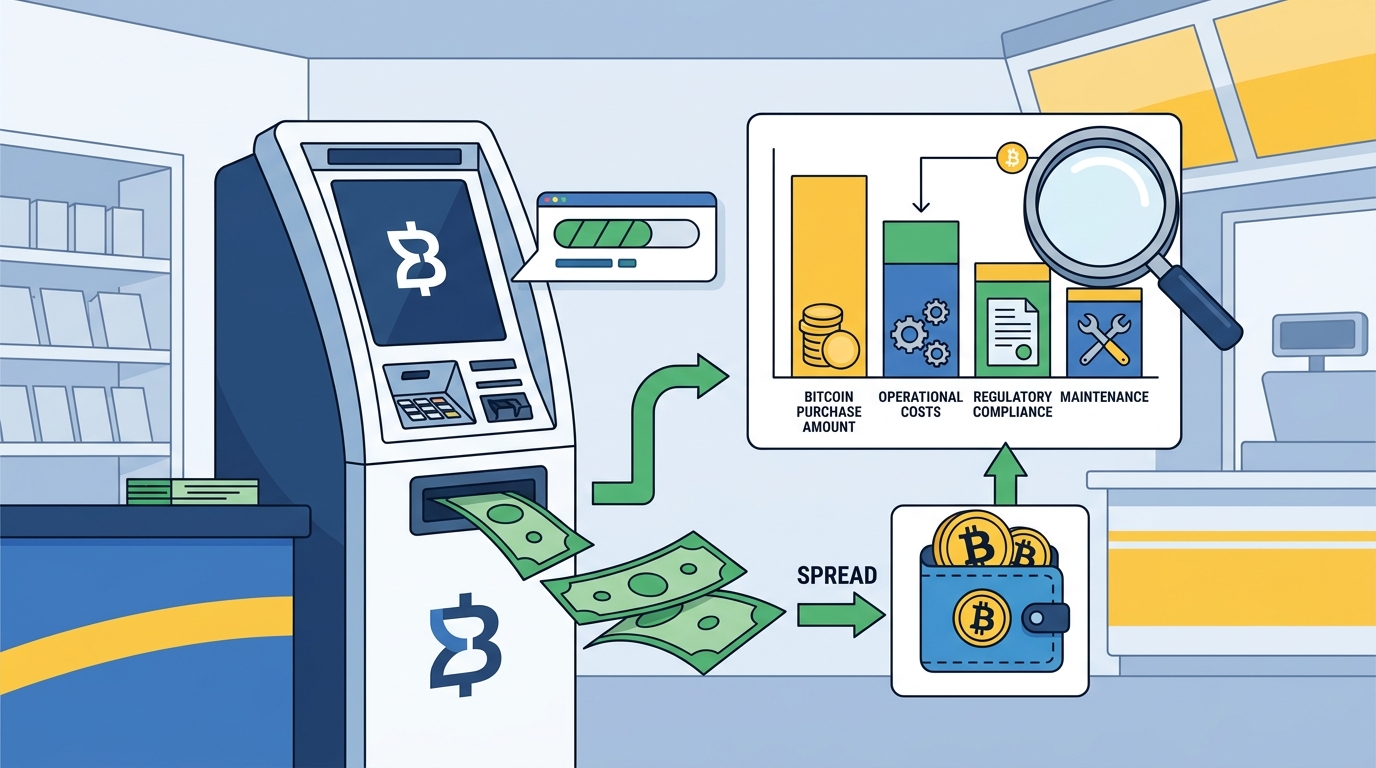
Understanding the true cost of buying cryptocurrency with cash is critical for any investor navigating the decentralized finance landscape. Recent industry data indicates that peer-to-peer cash-to-crypto transactions often carry premium fees ranging from 10% to 20% compared to traditional exchange deposits. This significant spread exists to cover the high operational costs of cash handling, regulatory compliance, and hardware maintenance. By analyzing the specific fee structures of major providers like Byte Federal, users can make informed decisions that protect their capital and maximize their initial crypto holdings.
How Kiosk Fees Are Calculated
Cryptocurrency kiosks operate on a fundamentally different economic model than centralized exchanges. The primary driver of cost is the physical infrastructure required to accept fiat currency. Unlike digital transfers, cash handling involves secure logistics, insurance, and regular replenishment cycles. These operational burdens are passed directly to the consumer through a combination of transaction fees and spread margins.
Transaction fees are typically charged as a flat percentage of the total purchase amount. This percentage often decreases as the transaction size increases, incentivizing larger deposits. However, the spread, which is the difference between the market price of Bitcoin and the price offered to the user, remains a constant factor. This spread ensures the kiosk operator remains profitable even during periods of high market volatility.
Regulatory compliance also plays a significant role in fee structures. Operators must adhere to strict anti-money laundering (AML) and know-your-customer (KYC) regulations. The cost of identity verification systems and legal oversight is embedded into the final price you pay. This ensures that the ecosystem remains secure and compliant with federal standards, as outlined in recent financial regulatory reports.
Byte Federal Pricing Model
Byte Federal has established a transparent pricing framework designed to balance accessibility with operational sustainability. Their model focuses on clear communication of costs to prevent user surprise at the point of sale. Understanding this structure is essential for anyone looking to integrate Bitcoin into their portfolio efficiently.
The core of Byte Federal's approach involves a competitive transaction fee that scales with volume. For new users, the platform often provides promotional discounts to lower the barrier to entry. For instance, new customers may receive a 25% discount on their first purchase over $50. This incentive is automatically applied when you register and verify your identity through their secure portal.
Byte Federal also offers enterprise-grade solutions for businesses seeking to integrate crypto payments. Their API services allow developers to build custom financial applications that leverage Bitcoin's security. This dual approach serves both individual retail investors and large-scale commercial entities.
The company's commitment to transparency is reflected in their real-time conversion tools. Users can view the exact amount of cryptocurrency they will receive before confirming the transaction. This eliminates the ambiguity that often plagues other kiosk networks. For more details on their service offerings, you can visit the services page.
Hidden Costs Explained
Beyond the visible transaction fee, several hidden costs can impact your net return. The most significant of these is the withdrawal fee. When you move cryptocurrency from a kiosk to a personal wallet, you must pay a network fee. This fee is determined by the blockchain's current congestion levels and is paid to miners, not the kiosk operator.
Another hidden cost is the time value of money. Cash kiosk transactions are instantaneous, but the spread means you start your investment slightly underwater. To break even, the price of Bitcoin must rise enough to cover the initial fee. This requires a strategic approach to entry timing and asset selection.
Identity verification requirements can also introduce indirect costs. While Byte Federal streamlines this process, other operators may require extensive documentation that delays your transaction. Delays in volatile markets can result in missed opportunities or unfavorable exchange rates. Understanding these dynamics is crucial for effective financial planning.
Comparison of Major Providers
Not all cash-to-crypto kiosks are created equal. Fee structures vary widely based on location, operator, and transaction size. The table below summarizes the typical characteristics of major market players.
| Provider Type | Average Fee Range | Spread Impact | Verification Speed | Best For |
|---|---|---|---|---|
| Byte Federal | 1-5% (Volume Dependent) | Low to Moderate | Fast (Biometric) | Security & Transparency |
| General Kiosk Networks | 10-20% | High | Slow (SMS/Email) | Quick Cash Access |
| Centralized Exchanges | 0.1-1% | N/A | Medium | Large Volume Trading |
| P2P Platforms | 0-2% | Variable | Variable | Privacy & Flexibility |
As shown in the data, centralized exchanges offer the lowest fees but require bank account linking. Cash kiosks provide anonymity and speed but at a premium. Byte Federal bridges this gap by offering enterprise-grade security with competitive retail pricing.
Optimizing Your Purchase
To minimize costs, consider consolidating your transactions. Larger purchases often qualify for lower percentage fees. Additionally, timing your purchase during periods of lower network congestion can reduce withdrawal costs. Always compare the total cost of ownership, including the spread and network fees, before executing a trade.
Using a personal hardware wallet is essential for long-term security. Sending your crypto to a kiosk's internal wallet exposes it to potential platform risks. Byte Federal encourages the use of personal wallets to maintain full control over your assets. For more information on secure storage, check out their Vault resources.
Finally, stay informed about market trends. Understanding Bitcoin's price movements helps you decide when to buy and when to wait. The converter tool on the Byte Federal website provides real-time data to assist in this decision-making process.
Key Takeaways
- Cash-to-crypto fees typically range from 10% to 20% across the industry.
- Byte Federal offers a 25% discount for new users on purchases over $50.
- The spread between market price and kiosk price is a major cost factor.
- Network withdrawal fees are paid to miners, not the kiosk operator.
- Byte Federal uses biometric authentication for enhanced security and speed.
- Larger transaction volumes often result in lower percentage-based fees.
- Regulatory compliance costs are embedded in all legal kiosk operations.
Frequently Asked Questions
What is the minimum transaction amount for Byte Federal kiosks?
The minimum transaction amount varies by location and local regulations, but it is typically around $10 to $20. This allows users to test the system with small amounts before committing larger sums.
How does Byte Federal verify user identity?
Byte Federal uses a secure identity verification process that may include SMS codes, email verification, or biometric data depending on the transaction size and local laws. This ensures compliance with AML regulations.
Are there any monthly fees for using Byte Federal kiosks?
No, there are no monthly subscription fees for using Byte Federal kiosks. You only pay the transaction fee associated with each specific purchase.
Can I sell cryptocurrency back to cash at Byte Federal kiosks?
Yes, many Byte Federal kiosks support two-way transactions, allowing you to sell crypto for cash. However, sell fees are often higher than buy fees due to the cost of cash replenishment.
Is my data safe when using a crypto kiosk?
Byte Federal prioritizes data security through enterprise-grade encryption and secure authentication methods. Your personal information is protected in accordance with strict privacy policies.
How long does a transaction take?
Transactions are typically completed in under three minutes. The speed is due to the direct blockchain integration and efficient verification processes.
What cryptocurrencies are available?
While Bitcoin is the primary asset, many kiosks also support Ethereum and other major altcoins. Check the specific kiosk screen for available options.
Start Buying Today
Take control of your financial future with secure, transparent, and efficient crypto transactions. Byte Federal provides the tools and infrastructure you need to navigate the digital asset landscape with confidence. Visit our locations page to find the nearest kiosk or explore our API solutions for business integration. Join thousands of users who trust Byte Federal for their crypto needs.