
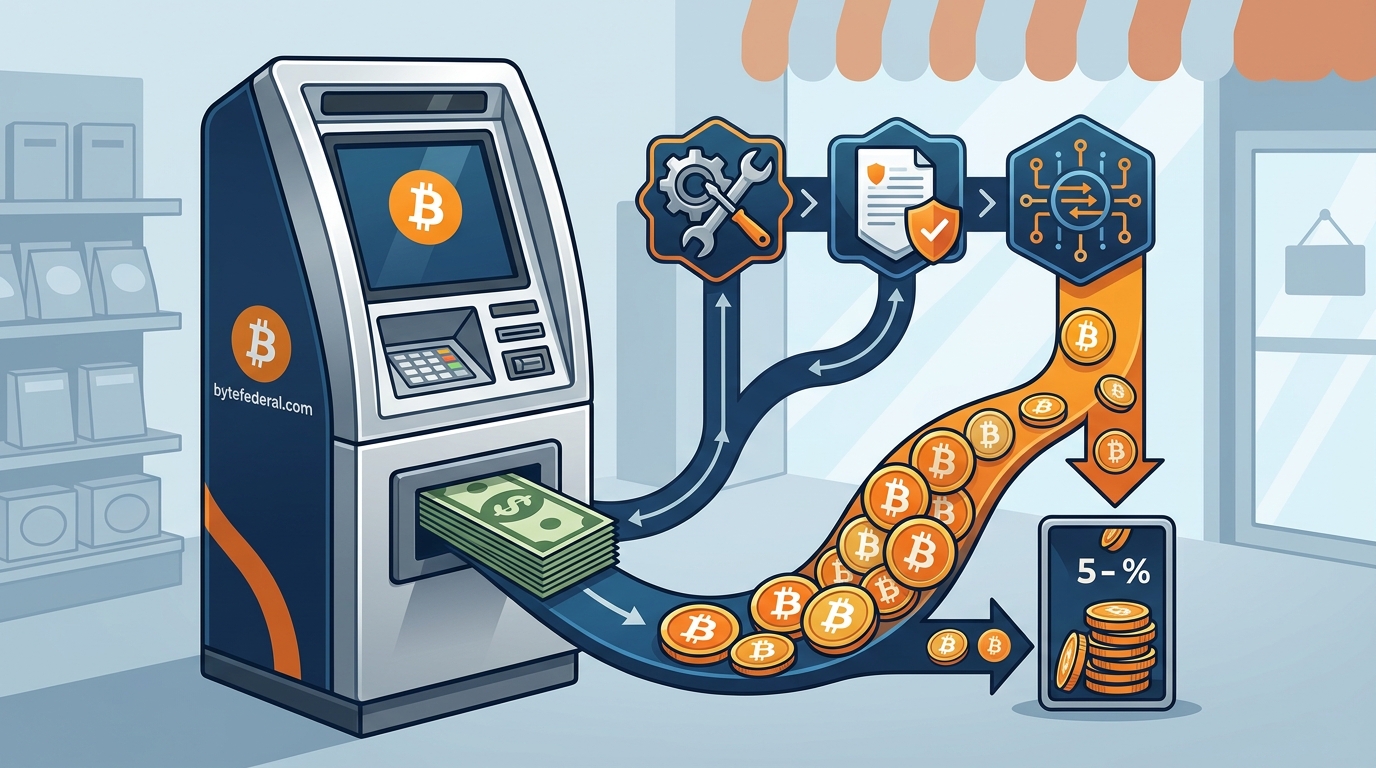
Converting physical currency into digital assets has become a standard financial practice for millions of Americans. According to recent industry reports, average transaction fees at standalone kiosks typically range between 8 to 12 percent per exchange. This pricing model covers hardware maintenance, regulatory compliance, and network processing costs. Understanding these charges helps users maximize their capital while navigating the evolving digital asset landscape. Operators must balance accessibility with operational sustainability to serve both retail investors and enterprise clients effectively. (Byte Federal Bitcoin ATMs)
How Kiosk Pricing Structures Work
Cryptocurrency is a decentralized digital currency that relies on cryptographic security rather than central banking authorities. When you insert cash into a terminal, the machine calculates a spread based on real-time market volatility. This spread compensates the operator for liquidity reserves and hardware depreciation. Most providers display the total fee before you confirm the transaction. Transparency remains the primary differentiator between legacy machines and modern networks.
Transaction fee is the explicit charge applied to every exchange to cover processing, compliance, and infrastructure expenses. These costs fluctuate based on network congestion and the specific digital asset being purchased. Bitcoin transactions typically carry higher base costs due to blockchain validation requirements. Ethereum and stablecoin exchanges often feature reduced percentages to attract high-volume traders. You should always verify the displayed percentage before inserting bills.
Regulatory Compliance and Operational Costs
Kiosk exchange is the physical terminal that facilitates peer-to-peer digital asset transactions without traditional banking intermediaries. Maintaining these devices requires strict adherence to financial regulations and anti-money laundering protocols. Operators must fund Know Your Customer verification systems and maintain secure cash vaults. These compliance measures directly impact the final price you pay at the counter.
According to federal enforcement data, financial institutions allocate approximately 15 percent of their operational budgets to regulatory reporting and audit trails. This financial burden translates directly into consumer pricing. Machines located in high-traffic commercial zones often charge premium rates to cover security deposits and insurance premiums. Retail locations with lower foot traffic may offer reduced percentages to drive consistent usage. Always review the posted fee schedule before approaching the terminal.
Byte Federal Fee Transparency Models
Byte Federal structures its pricing to prioritize accessibility for first-time users and enterprise clients alike. The platform offers a 25 percent discount on your initial purchase when transactions exceed fifty dollars. This promotional structure reduces the effective fee to a highly competitive rate. Users can access these terminals through a nationwide network of verified locations.
Enterprise clients utilizing the API integration module benefit from customized pricing tiers based on monthly volume. High-frequency traders can negotiate reduced spreads through the enterprise dashboard. The platform also provides a dedicated white-glove over-the-counter service for institutional transactions. This service eliminates automated terminal fees in favor of direct broker pricing. You can explore these options by visiting the services page to review current enterprise packages.
Comparing Transaction Tiers and Limits
Most kiosks enforce tiered limits to manage risk and comply with financial reporting thresholds. These limits dictate the maximum cash amount you can exchange per transaction or per day. Exceeding standard thresholds triggers additional identity verification steps. The verification process adds time to your transaction but ensures full regulatory compliance.
| Transaction Tier | Typical Fee Range | Verification Requirement | Best Use Case |
|---|---|---|---|
| Standard Retail | 8 to 12 percent | Phone number verification | Quick personal acquisitions |
| Enterprise API | Custom negotiated rates | Business entity documentation | High-volume corporate treasury |
| White-Glove OTC | Direct broker spread | Institutional compliance review | Large-scale asset acquisition |
| Promotional First Purchase | Reduced introductory rate | Standard identity check | New user onboarding |
Optimizing Your Exchange Strategy
Strategic planning significantly reduces your overall acquisition costs when utilizing automated terminals. You should always compare the displayed fee against the real-time market rate before confirming. Some networks offer embedded advertising slots that subsidize your transaction costs. These promotional exchanges allow you to view targeted content while receiving discounted rates.
Users can maximize their capital by scheduling transactions during low-network-congestion periods. Blockchain validation speeds improve during off-peak hours, which often correlates with lower terminal spreads. You should also consider utilizing a secure digital wallet to store your acquired assets. The platform provides a dedicated wallet solution that integrates seamlessly with their terminal network. You can register for an account to access these integrated tools and track your transaction history securely. Exploring available locations ensures you find a terminal with the most favorable fee structure for your specific geographic region.
Key Takeaways
- Standard retail kiosks typically charge between 8 and 12 percent per transaction.
- Byte Federal offers a 25 percent discount on qualifying first purchases over fifty dollars.
- Enterprise API clients receive customized pricing based on monthly exchange volume.
- White-glove over-the-counter services eliminate automated terminal fees for institutional clients.
- Network congestion directly impacts validation speeds and terminal spread calculations.
- Embedded advertising slots can subsidize transaction costs for eligible users.
- Compliance verification steps are mandatory for transactions exceeding standard reporting thresholds.
Frequently Asked Questions
Do all kiosks display fees before I insert cash?
Yes, reputable terminals must display the total fee and exchange rate before you confirm the transaction. This transparency requirement ensures you know exactly how much digital currency you will receive. Never proceed with an exchange if the fee schedule is hidden or unclear.
Can I negotiate fees at a standard retail kiosk?
Standard retail terminals operate on fixed pricing models determined by the network operator. You cannot negotiate rates at individual machines. Enterprise clients and high-volume traders can access customized pricing through API integrations or direct broker agreements.
How do promotional discounts affect my transaction limits?
Introductory discounts typically apply to your first qualifying transaction once you meet the minimum threshold. These promotions do not alter your standard daily or per-transaction limits. You must complete standard identity verification to activate the discounted rate.
Are there hidden fees when using cash at a kiosk?
Transparent operators disclose all charges on the screen before you confirm the exchange. You will see the exact fee amount, the network rate, and your total digital asset payout. Always verify the final numbers before pressing confirm to avoid unexpected deductions.
How does network congestion impact kiosk pricing?
Blockchain validation costs fluctuate based on global transaction volume. High congestion periods often trigger temporary spread increases at automated terminals. You can monitor network status through the platform dashboard to schedule transactions during lower-cost windows.
Do I need to pay additional fees for identity verification?
Standard identity verification is included in your base transaction fee. You will not face separate charges for phone number confirmation or document uploads. These compliance steps are mandatory to maintain regulatory standing and protect your capital.
Can I use a kiosk to sell cryptocurrency for cash?
Most modern terminals support two-way transactions, allowing you to exchange digital assets for physical currency. Selling transactions typically carry slightly higher spreads to account for liquidity reserves. You should compare the buy and sell rates before initiating the exchange.
Secure Your Next Digital Asset Exchange
Understanding kiosk pricing structures empowers you to make informed financial decisions. Byte Federal provides transparent fee schedules, enterprise-grade API integrations, and a nationwide network of verified terminals. You can explore available locations, register for your account, or contact the sales team to discuss customized enterprise pricing. Visit the main platform to begin your secure exchange today.