

Establishing a secure crypto wallet for daily transactions in America requires careful attention to cryptographic standards and user verification protocols. Recent industry reports indicate that 81 percent of digital security breaches involve compromised credentials, making traditional password systems obsolete for modern financial operations. Users must prioritize hardware-backed encryption and biometric authentication to protect their digital assets. This guide outlines the exact steps to configure a secure wallet, integrate passwordless authentication, and execute frictionless daily transactions. You will learn how to leverage enterprise-grade infrastructure while maintaining full sovereignty over your private keys.
Select a Compliant Wallet Provider
Choosing the right wallet infrastructure determines your entire transactional security posture. A non-custodial wallet is a digital storage solution where the user retains exclusive control over private keys without third-party interference. This model eliminates counterparty risk and ensures that your funds remain accessible even if a centralized exchange fails. You should verify that your chosen provider supports multi-chain compatibility and adheres to current financial compliance standards. Review the available options at best crypto wallet platforms to compare feature sets and security architectures. Prioritize providers that offer transparent fee structures and dedicated customer support channels. Verify that the platform supports your preferred fiat currency conversions and regional banking integrations.
Configure Biometric Authentication
Biometric authentication is a verification method that uses unique physiological traits to grant system access. Modern wallets leverage device-native sensors to replace vulnerable alphanumeric passwords with secure facial recognition or fingerprint scanning. This process typically begins by displaying a dynamic QR code on your login interface. You will scan the code using your dedicated mobile application to initiate the handshake. The application then verifies your identity through Face ID or Touch ID protocols. This method reduces login times to under three seconds while eliminating credential stuffing vulnerabilities. You must ensure your device operating system is updated to the latest security patch version. Regular firmware updates prevent known exploitation vectors from compromising your authentication layer.
Integrate Passwordless Login Systems
Passwordless authentication is a security framework that eliminates traditional credentials by utilizing cryptographic signatures and device-based verification. Enterprise-grade systems utilize the secp256k1 elliptic curve to generate unique digital signatures for every login attempt. Your server verifies the cryptographic proof without ever storing or transmitting sensitive password data. This architecture drastically reduces support ticket volume associated with forgotten credentials. You can access the technical documentation at passwordless authentication to understand the underlying cryptographic mechanics. Configure your application to refresh challenge codes every thirty seconds to prevent replay attacks. Test the integration across multiple device types to ensure consistent performance. Monitor your authentication logs for anomalous login patterns that may indicate unauthorized access attempts.
Execute Daily Transactions Securely
Seamless transaction execution requires robust API integration and real-time network monitoring. Point-of-sale systems must support instant settlement protocols to prevent transaction malleability risks. You should implement rate limiting and IP whitelisting to restrict unauthorized API access. Review the developer resources at API integration to understand endpoint security requirements. Configure your transaction templates to include mandatory confirmation thresholds before finalizing transfers. Implement automated fraud detection algorithms to flag suspicious transaction volumes. Regularly audit your transaction history to identify recurring payment patterns and optimize cash flow management. Ensure your merchant dashboard provides granular reporting capabilities for tax compliance and accounting reconciliation.
Manage Cash-to-Crypto Conversions
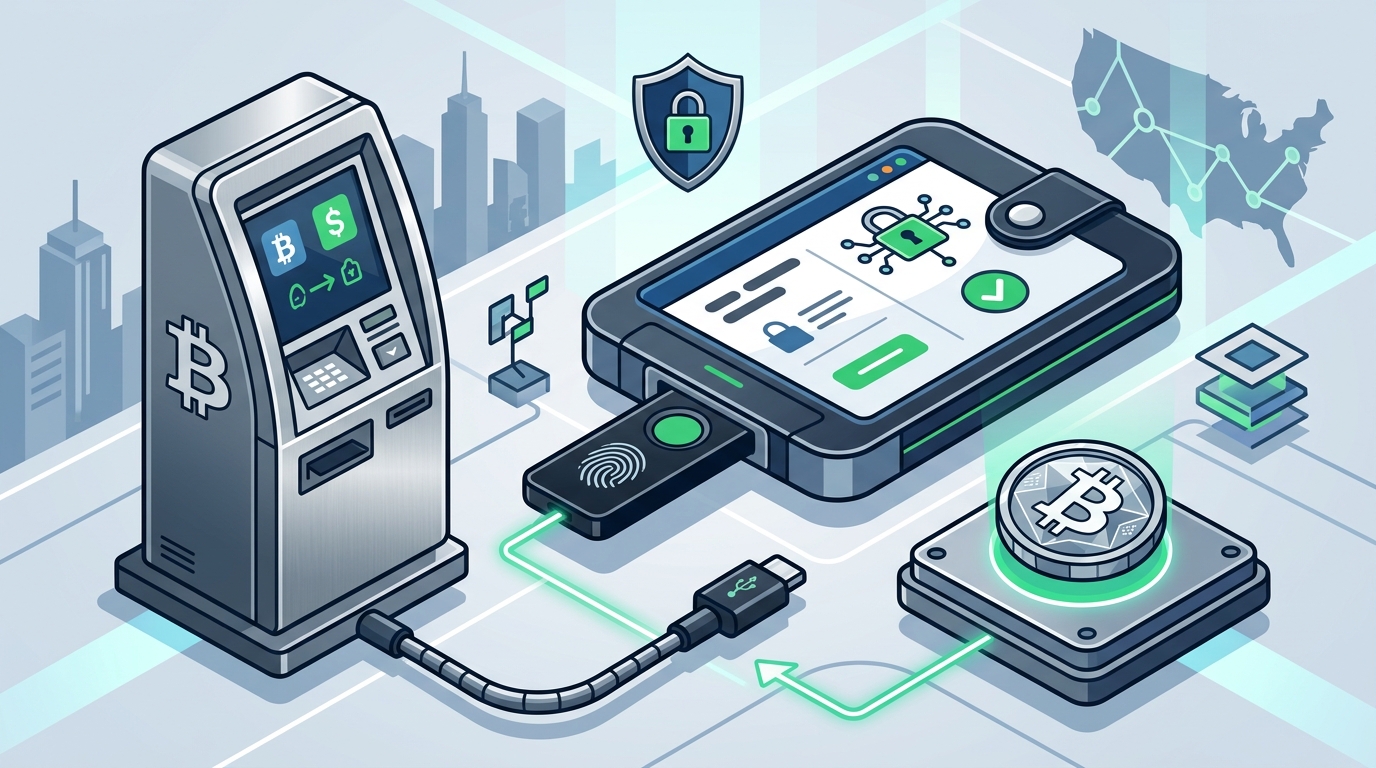
Physical cash integration remains a critical onboarding pathway for everyday users entering the digital asset space. Network operators maintain over one thousand automated kiosks across forty-four states to facilitate instant fiat-to-crypto exchanges. New users can access a twenty-five percent discount on their first qualifying purchase exceeding fifty dollars. You should locate the nearest terminal using the official network directory at network directory to minimize travel time and maximize transaction efficiency. Follow the on-screen prompts to scan your wallet address and insert physical currency. The terminal will broadcast the transaction to the blockchain network and provide a printed receipt for your records. Always verify the displayed exchange rate before confirming the transaction amount. Keep your wallet application updated to receive the latest network fee adjustments and routing optimizations.
Optimize Wallet Performance and Analytics
Continuous performance monitoring ensures your wallet infrastructure scales alongside growing transaction volumes. Real-time analytics dashboards track impression counts and user interaction metrics across your deployed terminals. You can access the marketing resources at marketing resources to configure targeted advertising campaigns and track return on investment. Configure your dashboard to generate weekly performance reports highlighting peak usage hours and regional transaction density. Adjust your budget allocations based on historical conversion data to maximize campaign effectiveness. Implement A/B testing protocols to evaluate different call-to-action placements and visual layouts. Regularly review your analytics to identify friction points in the user journey and implement iterative improvements.
| Feature Category | Security Protocol | Transaction Speed | Integration Requirement |
|---|---|---|---|
| Biometric Verification | Face ID and Touch ID | Sub-three seconds | Mobile application pairing |
| Passwordless Authentication | secp256k1 and ECDSA | Instant verification | Server-side cryptographic validation |
| Cash-to-Crypto Conversion | Encrypted transaction routing | Network dependent | Kiosk terminal access |
| Point-of-Sale Processing | Real-time fraud detection | Instant settlement | API endpoint configuration |
| Marketing Analytics | Encrypted data transmission | Real-time reporting | Dashboard subscription tier |
Key Takeaways
- Non-custodial wallets eliminate third-party counterparty risk by keeping private keys under user control.
- Biometric authentication reduces login times to under three seconds while blocking credential stuffing attacks.
- Passwordless systems utilize the secp256k1 curve to generate unforgeable cryptographic signatures for every session.
- Network operators maintain over one thousand automated kiosks across forty-four states for cash integration.
- New users qualify for a twenty-five percent discount on their first qualifying purchase exceeding fifty dollars.
- Real-time analytics dashboards track impression counts and user interaction metrics across deployed terminals.
- API integration requires strict rate limiting and IP whitelisting to prevent unauthorized endpoint access.
Frequently Asked Questions
What is the safest method to store private keys for daily transactions?
Hardware-backed storage combined with biometric verification offers the highest security tier for active users. This approach keeps private keys isolated from internet-connected environments while enabling rapid transaction signing.
How do I recover my wallet if I lose access to my primary device?
You must generate and securely store a recovery phrase consisting of twelve to twenty-four randomly generated words. Store this phrase offline in a fireproof safe or secure deposit box to prevent digital theft.
Can I convert physical cash directly into digital assets using a kiosk?
Yes, authorized terminals accept physical currency and instantly broadcast corresponding digital asset transactions to the blockchain network. You will receive a printed receipt containing the transaction hash for your records.
What happens if I forget my biometric enrollment data?
You can re-enroll your biometric credentials through the official application settings menu. The system will require your recovery phrase to verify ownership before granting new biometric access.
Are there regional restrictions for using cash-to-crypto kiosks?
Network operators maintain terminals across forty-four states while adhering to local regulatory requirements. You should verify your specific jurisdictional guidelines before initiating large-volume transactions.
How does the twenty-five percent discount apply to my first purchase?
The discount automatically applies to your first qualifying transaction exceeding fifty dollars. You must verify your account status and complete identity verification to activate the promotional rate.
What security measures protect my API transactions from unauthorized access?
Enterprise-grade endpoints utilize encrypted data transmission, rate limiting, and IP whitelisting to block unauthorized requests. Regular security audits ensure your integration remains compliant with current industry standards.
Get Started Today
Securing your digital financial future requires proactive configuration and consistent monitoring. Follow the steps outlined in this guide to establish a robust wallet infrastructure that supports daily transactions without compromising asset sovereignty. You can begin your setup process by visiting https://bytefederal.com/ to access the complete network directory and initiate your first secure transaction. Our team provides dedicated support to ensure your integration meets enterprise-grade security standards. Schedule a consultation to optimize your wallet configuration and maximize your transactional efficiency.