

Self-custody is the cornerstone of true financial sovereignty in the digital age. According to recent industry analyses, over 400 million individuals globally now hold some form of cryptocurrency, yet the majority still rely on centralized exchanges for storage. This reliance introduces significant counterparty risk. The solution lies in offline storage methods that keep private keys isolated from internet-connected threats. This guide details how to secure your assets using hardware wallets, paper backups, and advanced cryptographic vaults.
What Is Offline Storage?
Offline storage, often referred to as cold storage, is a method of keeping cryptocurrency private keys in a secure environment that is not connected to the internet. This isolation prevents remote hackers from accessing your funds through network vulnerabilities. Cold storage is the gold standard for long-term asset preservation.
When you hold your own keys, you maintain full control over your wealth. If you leave your assets on an exchange, you are essentially lending your crypto to the platform. If that platform faces insolvency or regulatory action, your funds may be frozen or lost. By utilizing offline methods, you eliminate this single point of failure. The process involves generating keys on a secure device and then storing that device in a physically safe location.
For those seeking to understand the foundational technology, Bitcoin cryptography relies on asymmetric encryption. This ensures that while anyone can send funds to your public address, only the holder of the corresponding private key can authorize transactions. Offline storage ensures that this private key never touches a network, rendering it immune to phishing, malware, and remote exploits.
Hardware Wallets Explained
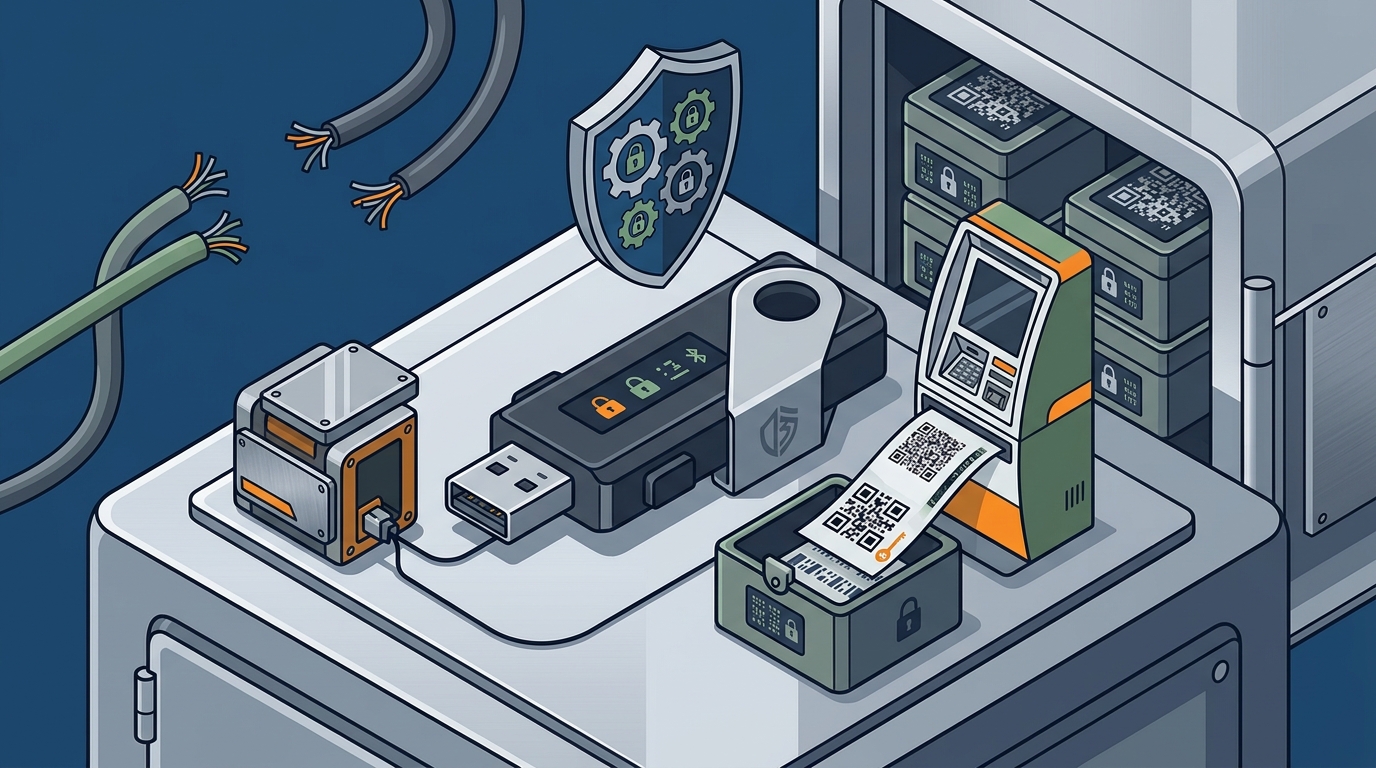
Hardware wallets are specialized physical devices designed to generate and store private keys securely. They look like USB drives or small calculators and connect to your computer or smartphone only when you need to sign a transaction. Hardware wallets provide a secure element for key generation.
These devices use a secure chip, similar to those found in passports or credit cards, to isolate cryptographic operations. When you connect a hardware wallet to initiate a transfer, the transaction details are displayed on the device's screen. You must physically verify and confirm the address and amount on the device itself. This prevents malicious software on your computer from altering the destination address.
Byte Federal offers integrated solutions for secure asset management. Our Vault service provides a robust infrastructure for users who require both accessibility and security. For those who prefer self-custody, hardware wallets remain the most popular choice among serious investors. They balance convenience with the highest level of security available to retail users.
When selecting a hardware wallet, look for open-source firmware and a strong track record of security audits. The device should support multiple cryptocurrencies if you hold a diversified portfolio. Additionally, ensure it supports the latest security protocols, such as secure element chips and passphrase encryption. This adds an extra layer of protection, allowing you to create hidden wallets with different PIN codes.
Paper Wallets and Seed Phrases
Paper wallets involve printing your public and private keys on physical paper. While less common today due to the rise of user-friendly hardware wallets, the concept remains vital for emergency backups. Seed phrases are the master key to your digital identity.
A seed phrase, typically consisting of 12 to 24 random words, is the human-readable representation of your private key. If you lose your hardware wallet or computer, this phrase is the only way to recover your funds. It is critical to write this phrase down on paper and store it in a fireproof safe or a safety deposit box. Never store it digitally, such as in a text file, email, or cloud drive.
Creating a paper backup requires extreme care. You must generate the phrase on a clean, air-gapped computer that has never been connected to the internet. Using a compromised device to generate a seed phrase means the keys may already be known to attackers. Once written, verify the words carefully against the device's output. Any error in transcription will result in permanent loss of access to your funds.
For educational resources on how to properly generate and store these backups, visit our Learn platform. Understanding the mechanics of seed recovery is essential for any investor. It transforms your digital assets from fragile data into tangible, recoverable wealth.
The Role of Digital Vaults
While hardware wallets are excellent for self-custody, some users prefer a managed approach that still prioritizes security. Digital vaults offer a hybrid solution, combining the convenience of online access with institutional-grade security protocols. Byte Federal Vault is designed to protect your assets while allowing for seamless transactions when needed.
Digital vaults often utilize multi-signature technology. This requires multiple independent keys to authorize a transaction, reducing the risk of a single point of failure. If one key is compromised, the attacker cannot move your funds without the other keys. This is particularly useful for businesses or families managing shared assets.
Furthermore, digital vaults can integrate with our Point of Sale systems for merchants who wish to accept crypto payments while maintaining control over their treasury. This integration allows for real-time conversion and secure storage, bridging the gap between daily commerce and long-term holding. The vault acts as a secure bridge, ensuring that your operational funds are accessible while your savings remain protected.
Storage Method Comparison
Choosing the right storage method depends on your volume of assets, frequency of use, and technical comfort level. The table below compares the primary options available to investors.
| Storage Method | Security Level | Convenience | Best For |
|---|---|---|---|
| Hardware Wallet | High | Medium | Long-term holders |
| Paper Backup | Very High | Low | Emergency recovery |
| Digital Vault | High | High | Active traders |
| Exchange Custody | Low | Very High | Short-term speculation |
Hardware wallets offer the best balance for most users. They are immune to remote hacking but require physical possession to use. Paper backups are a necessary supplement, not a primary storage method, due to the risk of physical damage. Digital vaults are ideal for those who need frequent access but want to avoid the risks of keeping large sums on an exchange.
Key Takeaways
- Offline storage keeps private keys isolated from internet threats, preventing remote theft.
- Hardware wallets use secure elements to sign transactions without exposing keys to your computer.
- Seed phrases are the ultimate recovery method and must be stored physically and securely.
- Never share your seed phrase or private key with anyone, including support staff.
- Digital vaults offer a secure, managed alternative for users who need frequent access.
- Multi-signature wallets add an extra layer of security for shared or business assets.
- Regularly verify your backups to ensure you can recover your funds if needed.
Frequently Asked Questions
Is it safe to store crypto on an exchange?
Storing crypto on an exchange is generally considered less secure than self-custody. If the exchange is hacked or goes bankrupt, you may lose your funds. It is recommended to use exchanges only for trading and move long-term holdings to offline storage.
What happens if I lose my hardware wallet?
If you lose your hardware wallet, you can recover your funds using your seed phrase. As long as you have the 12 or 24 words written down securely, you can restore your wallet on a new device. Never share this phrase with anyone.
Can I use a hardware wallet with any cryptocurrency?
Not all hardware wallets support every cryptocurrency. Most major wallets support Bitcoin, Ethereum, and other popular altcoins. Check the compatibility list of the specific wallet before purchasing to ensure it supports your assets.
How do I verify a transaction on a hardware wallet?
When you initiate a transaction, the details are displayed on the hardware wallet's screen. You must physically verify the address and amount on the device before confirming. This ensures that no malware on your computer has altered the transaction details.
What is a digital vault?
A digital vault is a secure online storage solution that often uses multi-signature technology. It allows users to access their funds conveniently while maintaining high security standards. Byte Federal Vault is an example of such a service.
Are paper wallets still relevant?
While less common as a primary storage method, paper wallets remain relevant for emergency backups. They provide a physical record of your keys that is immune to digital attacks. However, they are susceptible to physical damage like fire or water.
How does Byte Federal help with secure storage?
Byte Federal provides a range of solutions including secure vaults, POS systems, and educational resources. We help users navigate the landscape of secure asset management and compliance.
Secure Your Assets Today
Financial sovereignty requires proactive security measures. Do not leave your wealth vulnerable to centralized risks. Explore our Vault services to find the perfect balance of security and accessibility for your needs. Visit our locations page to find a nearby kiosk or contact our support team for personalized guidance. Take control of your financial future with Byte Federal.