
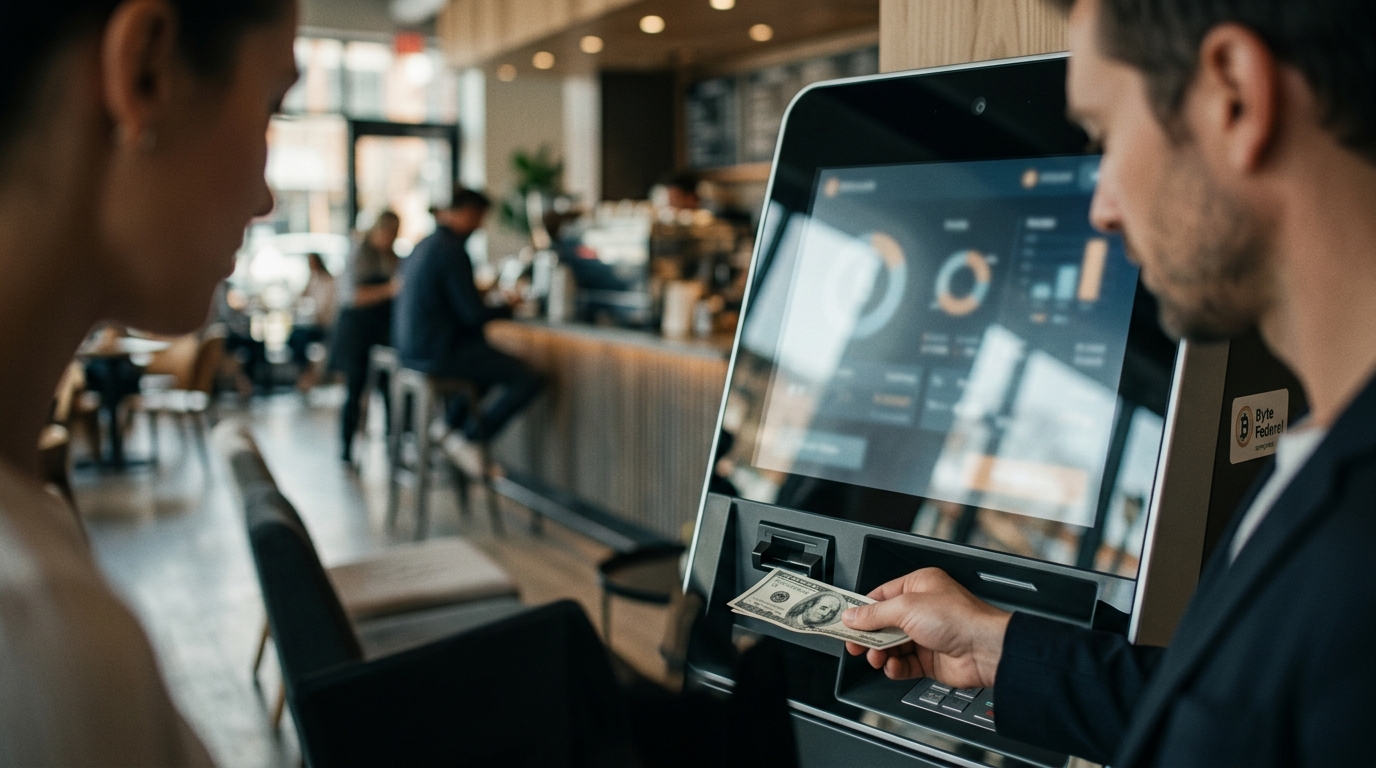
Bitcoin ATM fees typically range from 3% to 10% of the transaction amount, with some operators charging higher rates for smaller purchases. These costs cover the operator's service, hardware maintenance, and regulatory compliance. This guide breaks down every fee component you will encounter when using a BTC machine to buy cryptocurrency, helping you calculate the true cost of your transaction before you insert a single bill.
Operator Specific Fees
Every Bitcoin ATM operator sets their own pricing structure, which means the fee you pay depends entirely on the specific machine you use. Operator specific fees are the charges set by the company that owns and maintains the physical kiosk. These fees are distinct from network fees and are the primary variable in your total cost. When you search for a Bitcoin ATM near me, you are not just looking for a location; you are looking for a specific operator with a specific fee schedule.
Why Operators Charge Different Rates
Operators like Byte Federal determine their fees based on several factors. The cost of hardware, the location of the machine, and the level of customer support all influence the final price. A machine located in a high-traffic urban area may have different overhead costs than one in a rural convenience store. Additionally, the regulatory compliance required to operate a Bitcoin ATM in the United States adds to the operational expenses that operators must recover through transaction fees.
Comparing Major Operators
Byte Federal operates a network of over 1,350 kiosks across 42 U.S. states. By maintaining a large, vertically integrated network, the company can offer competitive rates that reflect the efficiency of its infrastructure. When you use a Bitcoin ATM in Los Angeles or any other city in the network, the fee displayed on the screen is the final cost. There are no hidden charges added after the transaction is confirmed.
Fee Components Breakdown
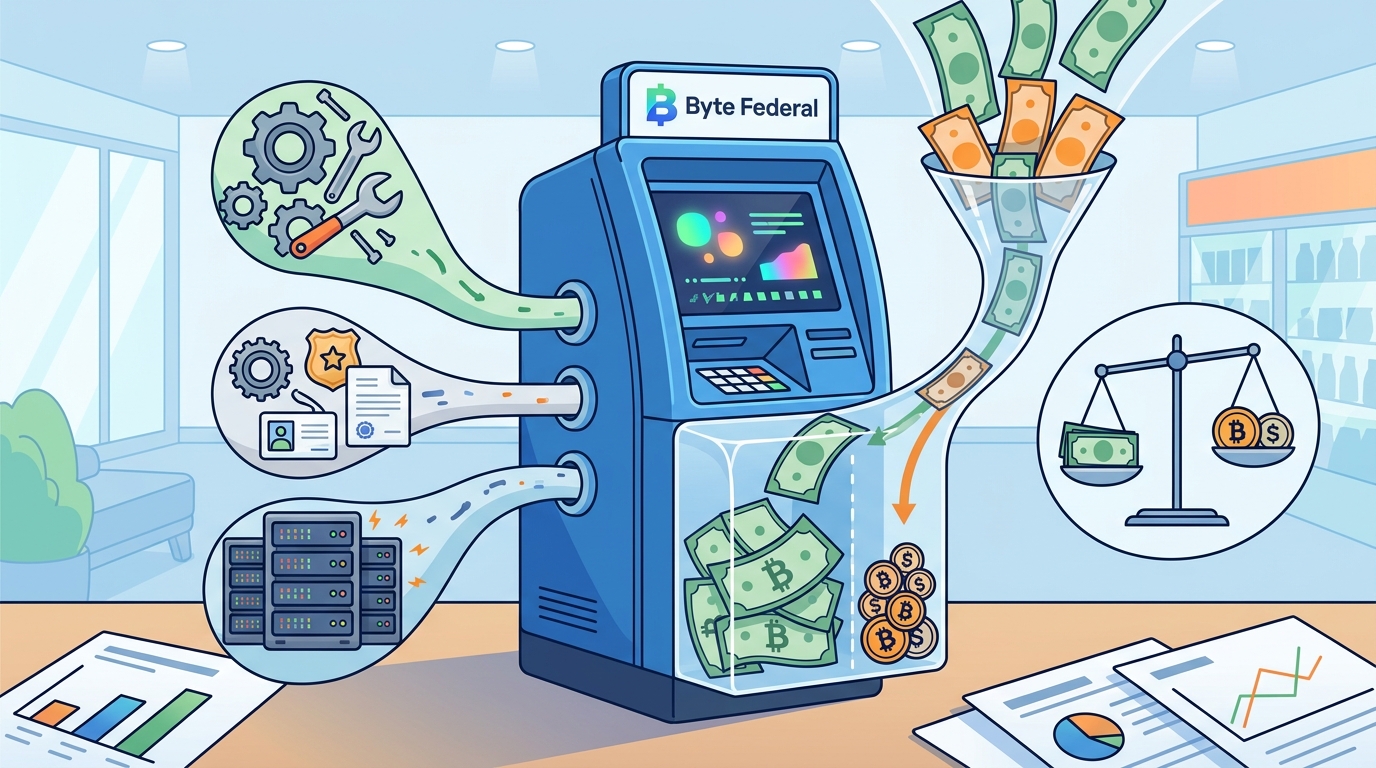
Understanding the anatomy of a Bitcoin ATM fee is essential for making informed financial decisions. Fee components are the individual parts that make up the total cost of a transaction. These typically include a service fee, a network fee, and an exchange spread. Each component serves a different purpose and is calculated differently.
The Service Fee
The service fee is the most visible part of the cost. It is usually expressed as a percentage of the total transaction amount. This fee covers the operator's costs for maintaining the hardware, providing customer support, and ensuring the machine is stocked with cash. For a Bitcoin machine transaction, this is the primary fee you will see highlighted on the display. It is important to note that this percentage may change based on the amount you are purchasing. Many operators use a tiered structure where smaller transactions incur a higher percentage fee to cover the fixed costs of the transaction, while larger transactions incur a lower percentage fee.
The Network Fee
The Exchange Spread
Key Takeaways
- Bitcoin ATM fees typically range from 3% to 10% of the transaction amount.
- Operator specific fees are set by the company that owns the machine and vary by location and operator.
- The total cost includes a service fee, a network fee, and an exchange spread.
- Smaller transactions often incur a higher percentage fee due to tiered pricing structures.
- Network fees are fixed charges that cover blockchain transaction costs.
- The exchange spread is the difference between the market price and the ATM's offered price.
- Always verify the final fee on the machine's screen before inserting cash.
- Using a large, established network like Byte Federal can help ensure transparent and competitive pricing.
Frequently Asked Questions
What is the average fee for a Bitcoin ATM?
The average fee for a Bitcoin ATM in the United States is between 5% and 8% of the transaction amount. This includes the service fee, network fee, and exchange spread. However, rates can vary significantly depending on the operator and the location of the machine.
Do Bitcoin ATM fees change based on the amount I buy?
What is the difference between a service fee and a network fee?
A service fee is a percentage-based charge set by the ATM operator to cover their operational costs. A network fee is a fixed charge that covers the cost of broadcasting the transaction to the Bitcoin blockchain. The service fee varies by operator, while the network fee varies by blockchain congestion.
How can I find the cheapest Bitcoin ATM near me?
Are there any hidden fees when using a Bitcoin ATM?
Reputable operators do not charge hidden fees. The total cost should be displayed on the machine's screen before you complete the transaction. This includes all service fees, network fees, and exchange spreads. Always read the fee breakdown on the screen to ensure you understand the total cost before inserting cash.
Why are Bitcoin ATM fees higher than online exchange fees?
Bitcoin ATM fees are higher than online exchange fees because ATMs involve physical hardware, cash handling, and regulatory compliance. These costs are passed on to the user in the form of higher fees. Online exchanges do not have these physical costs, so they can offer lower fees. However, ATMs provide the convenience of buying Bitcoin with cash, which is not available on most online exchanges.
Conclusion
Understanding Bitcoin ATM fees is essential for anyone looking to buy cryptocurrency with cash. By breaking down the fee components, including the service fee, network fee, and exchange spread, you can make informed decisions about where and how to buy Bitcoin. Byte Federal provides a transparent and reliable network of Bitcoin ATMs across the United States, ensuring that you know exactly what you are paying before you transact. Whether you are a first-time buyer or an experienced investor, knowing the true cost of a Bitcoin ATM transaction empowers you to make the best financial decisions. Use the Bitcoin ATM locator to find a machine near you and start your Bitcoin journey with confidence.