

The global cryptocurrency market has reached a valuation exceeding $3 trillion, fundamentally altering how individuals perceive digital asset acquisition. For millions of users, Bitcoin ATMs serve as the critical bridge between traditional fiat currency and the decentralized economy. However, the cost of this convenience is often obscured by complex fee structures that vary significantly across providers. Understanding these costs is essential for maximizing investment returns and avoiding unexpected financial drains during transactions. (About Byte Federal American)
What Are Bitcoin ATM Fees?
Bitcoin ATM fees are the charges applied by machine operators to facilitate the conversion of cash or card payments into cryptocurrency. These fees cover operational costs, including hardware maintenance, regulatory compliance, liquidity provision, and network transaction costs. Unlike traditional bank transfers, which often have minimal or no fees for domestic transfers, cryptocurrency kiosks operate on a different economic model. (Bitcoin ATMs Crypto Wallets)
Bitcoin is a decentralized digital currency that allows for peer-to-peer transactions without intermediaries. However, the infrastructure supporting these transactions requires significant capital investment. Operators must pay for secure hardware, real-time liquidity reserves, and adherence to strict financial regulations. Consequently, fees can range from 5% to 20% depending on the machine type, location, and payment method used.
Understanding the components of these fees helps users make informed decisions. Some fees are fixed, while others are percentage-based. The total cost is often displayed before the transaction is confirmed, allowing users to evaluate whether the purchase aligns with their financial goals.
Byte Federal's Transparent Pricing Model
Byte Federal operates with a commitment to transparency and user empowerment. As a leading provider of Bitcoin ATMs, crypto wallets, and POS systems, the company prioritizes clear communication regarding costs. This approach distinguishes Byte Federal from competitors who may hide fees in fine print or apply aggressive markups.
The Byte Federal ecosystem includes a nationwide network of kiosks designed to provide seamless access to digital assets. By maintaining a robust infrastructure, Byte Federal ensures that users receive competitive rates while benefiting from high-security standards. The company's focus on education and accessibility is reflected in its learning platform, which helps users understand market dynamics and fee structures.
Transparency is not just a marketing claim but a core operational principle. Users can verify transaction details in real-time, ensuring that the fees charged match the disclosed rates. This level of clarity builds trust and encourages long-term engagement with the platform.
Breakdown of Transaction Costs
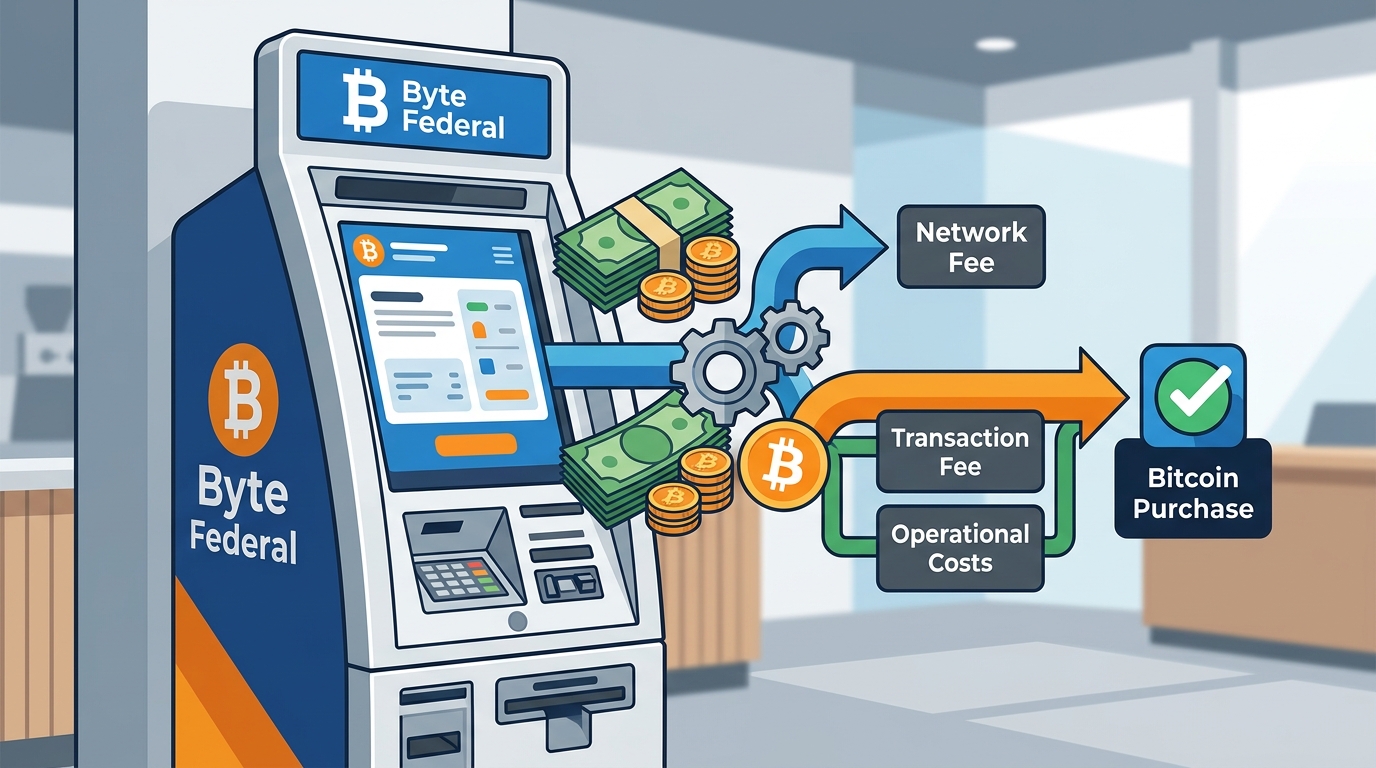
To fully grasp the pricing structure, it is necessary to dissect the individual components that contribute to the total fee. These components include network fees, operator margins, and payment processing costs.
Network Transaction Fees
Network fees, also known as miner fees, are paid to blockchain validators to process transactions. These fees fluctuate based on network congestion. During periods of high demand, fees can spike significantly. Byte Federal's systems are designed to account for these fluctuations, ensuring that users are charged accurately for the resources consumed.
Operator Margin
The operator margin covers the profit and operational expenses of the kiosk owner. This includes rent, electricity, cash handling, and maintenance. Byte Federal works with a network of partners who adhere to strict pricing guidelines to prevent excessive markups. This collaborative approach helps keep costs reasonable for end-users.
Payment Processing Fees
When users pay with a debit or credit card, additional processing fees are incurred. These fees are charged by financial institutions and payment processors. Cash transactions typically incur lower fees because they bypass these intermediaries. Understanding this distinction is crucial for cost-conscious investors.
Fee Comparison Analysis
Comparing different providers and transaction methods reveals significant variations in cost efficiency. The table below outlines typical fee structures across various categories.
| Transaction Type | Average Fee Range | Speed | Best For |
|---|---|---|---|
| Cash Purchase | 3% - 8% | Instant | Privacy and cost efficiency |
| Debit Card Purchase | 8% - 15% | Instant | Convenience and speed |
| Credit Card Purchase | 12% - 20% | Instant | Emergency acquisitions |
| Bank Transfer (ACH) | 1% - 3% | 1-3 Days | Large volume investments |
As shown in the data, cash transactions generally offer the most favorable rates. However, the choice of payment method should also consider security and convenience factors. Byte Federal's kiosks support multiple payment options to accommodate diverse user preferences.
Strategies to Optimize Transaction Costs
Minimizing fees requires strategic planning and awareness of market conditions. Here are several actionable strategies to reduce costs.
Use Cash Whenever Possible
Cash transactions avoid the high processing fees associated with card payments. By carrying cash to a Byte Federal ATM, users can significantly reduce the percentage of their investment lost to fees. This method is particularly effective for smaller, frequent purchases.
Monitor Network Congestion
Network fees vary based on blockchain activity. Monitoring tools and market converters can help users identify periods of lower congestion. Transacting during off-peak hours can result in lower network fees, further reducing the total cost.
Leverage New User Discounts
Byte Federal offers incentives for new users, including discounts on first purchases. These promotions can provide substantial savings, especially for those making larger initial investments. Staying informed about current offers ensures that users do not miss out on cost-saving opportunities.
Utilize the ByteVault App
The ByteVault app provides a seamless experience for managing crypto assets. By using the app for verification and transactions, users can benefit from streamlined processes and potentially lower fees. The app also offers educational resources to help users make informed decisions.
Key Takeaways
- Bitcoin ATM fees typically range from 3% to 20%, depending on the payment method and network conditions.
- Cash transactions generally incur lower fees than card payments due to the absence of processing charges.
- Byte Federal prioritizes transparency, providing clear fee disclosures before transactions are completed.
- Network congestion directly impacts miner fees, making timing a critical factor in cost optimization.
- New users can access discounts and educational resources to enhance their investment strategy.
- Understanding the components of fees helps users evaluate the true cost of cryptocurrency acquisition.
- Byte Federal's nationwide network ensures accessibility and competitive pricing across multiple regions.
Frequently Asked Questions
Why are Bitcoin ATM fees higher than exchange fees?
Bitcoin ATM fees are higher because they cover the cost of instant liquidity, physical infrastructure, and regulatory compliance. Exchanges often have lower fees because they operate digitally with less overhead, but they may lack the immediacy and privacy of ATMs.
Can I negotiate fees at a Byte Federal ATM?
Fees at Byte Federal ATMs are standardized and displayed before the transaction. While negotiation is not possible, users can choose to transact during off-peak hours or use cash to minimize costs.
How does Byte Federal ensure fee transparency?
Byte Federal displays all fees, including network costs and operator margins, on the screen before the user confirms the transaction. This ensures that users are fully informed and can make an educated decision.
What is the minimum transaction amount?
The minimum transaction amount varies by kiosk location and regulatory requirements. Typically, the minimum is around $10 to $20, but users should check the specific machine's guidelines.
Are there any hidden fees?
Byte Federal is committed to transparency and does not charge hidden fees. All costs are disclosed upfront, allowing users to calculate the total amount they will receive.
How often do fees change?
Fees can change based on network congestion, liquidity availability, and operational costs. Byte Federal monitors these factors closely to ensure rates remain competitive and fair.
Is there a maximum transaction limit?
Transaction limits are determined by regulatory requirements and the specific kiosk's configuration. Users may need to verify their identity for larger transactions to comply with anti-money laundering laws.
Start Your Secure Transaction
Understanding Bitcoin ATM fees is the first step toward mastering digital asset acquisition. Byte Federal provides the tools, transparency, and infrastructure needed to navigate this complex landscape with confidence. Whether you are a first-time buyer or an experienced investor, our network of ATMs offers a reliable and cost-effective solution.
Visit our location finder to find the nearest kiosk and begin your journey. Join thousands of users who trust Byte Federal for secure, transparent, and efficient cryptocurrency transactions. Take control of your financial future today.