
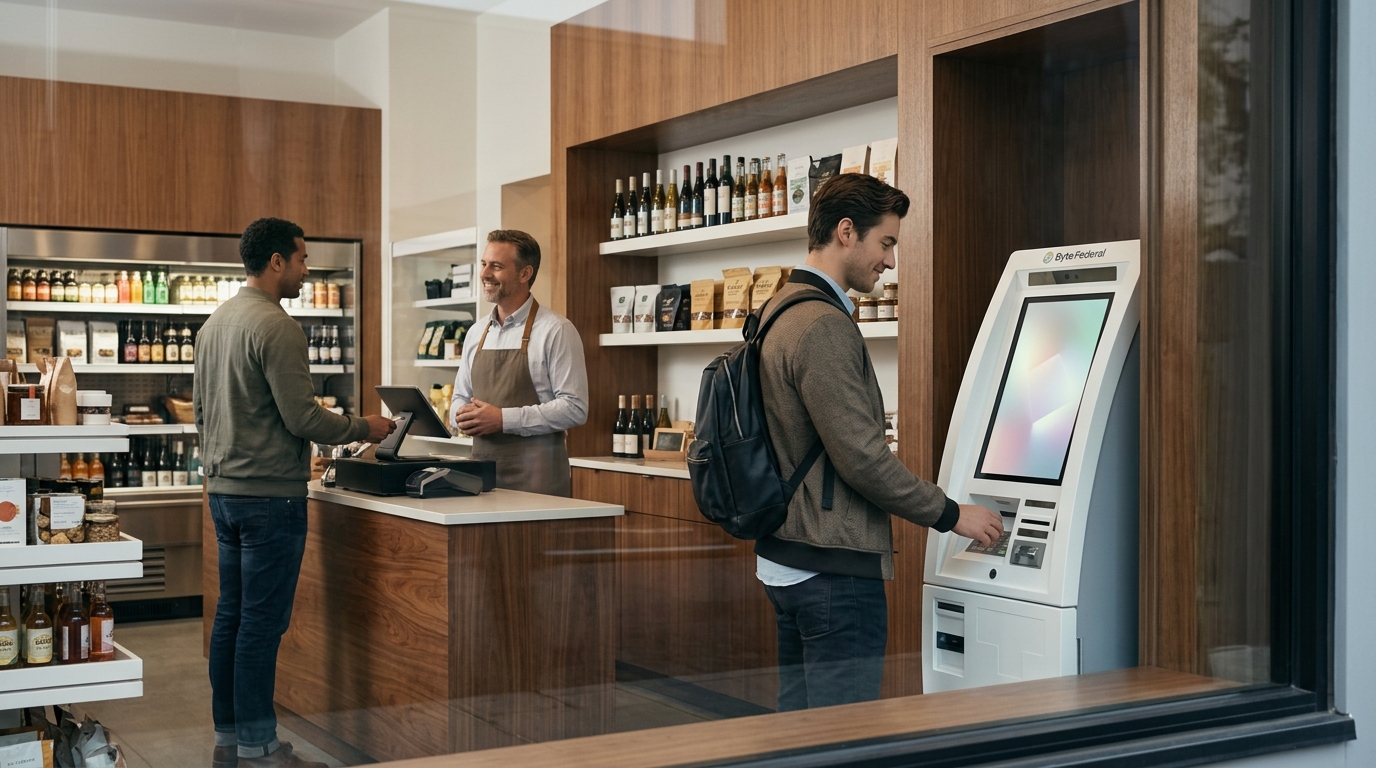
Integrating cryptocurrency infrastructure into a physical retail environment has shifted from a niche experiment to a standard revenue stream for forward-thinking business owners. According to recent industry data from CoinATMRadar, the global network of Bitcoin ATMs has surpassed 40,000 units, with retail partnerships driving the majority of new installations. This growth is not accidental. It is the result of clear economic incentives for store owners who understand the underlying cost structures and revenue potential. For a retail operator, the decision to host a Bitcoin ATM is not just about technology. It is about capturing a new demographic of customers who demand instant liquidity and privacy. (Contact Us)
Understanding Hosting Models
Before calculating potential profits, you must understand how the hardware and software are delivered. The Bitcoin ATM industry operates primarily through two distinct hosting models: the revenue-share model and the flat-fee leasing model. Each approach carries different risk profiles and cash flow implications for your retail business.
The revenue-share model is the most common entry point for new retail partners. In this arrangement, the ATM provider supplies the machine, handles all maintenance, and manages the software updates. In exchange, the provider takes a significant percentage of the transaction fees generated by the machine. This model is ideal for stores that want to minimize upfront capital expenditure. You essentially trade a portion of your potential upside for zero operational headache. The provider assumes the risk of machine downtime and technical failures.
Conversely, the flat-fee leasing model requires you to pay a fixed monthly rate for the use of the ATM. Under this structure, you retain 100% of the transaction fees collected from customers. This model is better suited for high-traffic locations with strong crypto adoption. If your store generates enough volume, keeping all the revenue will significantly outperform a revenue-share agreement. However, you are responsible for all maintenance costs, software licensing, and hardware replacement if the machine breaks down.
For more details on how ByteFederal structures its partnerships, you can explore our ATM hosting services to see which model aligns with your specific retail environment.
Cost Breakdown and Hidden Fees
Transparency is critical when evaluating the financial viability of a Bitcoin ATM. While the headline cost of leasing might seem low, several operational expenses can erode your net profit if not accounted for. Understanding these costs prevents unexpected financial drains in the first year of operation.
Hardware Acquisition or Lease Costs are the most obvious expense. If you choose to purchase a machine outright, prices range from $3,000 to $10,000 depending on whether it is a single-sided or dual-sided unit. Dual-sided machines allow both buying and selling of crypto, which typically generates higher transaction volumes. If you opt for leasing, monthly costs generally fall between $100 and $300. This fee often includes basic software support but rarely covers physical repairs.
Transaction Processing Fees are charged by the liquidity provider or the ATM software platform. These fees are usually a percentage of the transaction amount, ranging from 1% to 3%. In a revenue-share model, this fee is deducted before your cut is calculated. In a flat-fee model, you pay this fee directly to the software provider. High transaction volumes make this a significant line item.
Cash Handling and Security Costs are often overlooked. You must ensure the ATM is housed in a secure, accessible location. This may require installing a secure enclosure, upgrading your store's lighting, or even hiring additional security personnel for high-risk areas. Additionally, you will need to budget for regular cash replenishment if you are managing the cash box yourself. If you use a third-party cash management service, expect to pay per visit or a monthly subscription fee.
For a deeper dive into the technical specifications of our hardware, review our ATM hardware catalog to compare features and durability ratings.
Revenue Models Explained
Bitcoin ATMs generate revenue primarily through transaction fees charged to the end-user. These fees are typically split between the machine owner (you) and the ATM network operator. Understanding how these fees are structured helps you forecast your monthly income accurately.
Buy and Sell Fees are the core revenue drivers. Customers pay a fee to buy Bitcoin with cash, and another fee to sell Bitcoin for cash. The average fee for buying crypto is higher than selling, often ranging from 7% to 12% for the consumer. This high fee is due to the liquidity risk and volatility exposure taken by the ATM operator. For the store owner, the net take-home rate after network fees usually ranges from 3% to 5% of the transaction value.
Volume-Based Scaling is crucial for profitability. A single Bitcoin ATM in a low-traffic location might generate only $200 to $500 in net profit per month. However, a machine in a high-traffic convenience store, liquor store, or money transfer center can generate $1,000 to $3,000 or more monthly. The key is foot traffic and customer familiarity with cryptocurrency. Stores that already serve a demographic likely to use crypto, such as young adults or expatriates, see faster adoption.
Additional Revenue Streams can include advertising space on the ATM screen. Some networks allow you to display local ads or promotional content, generating a small additional monthly income. While not a primary revenue source, it helps offset operational costs.
To see how ByteFederal optimizes revenue sharing for its partners, visit our partner program page for detailed commission structures.
ROI Analysis and Timeline
Calculating the Return on Investment (ROI) requires a realistic view of both costs and projected revenue. The timeline to break even varies based on your hosting model and location.
In a Revenue-Share Model, your initial investment is near zero. Your ROI is measured by the monthly passive income generated. If the machine generates $400 in net profit per month, and you have no upfront costs, your ROI is immediate. However, your total lifetime earnings are capped by the percentage you give to the provider. This model is best for businesses that want to test the waters without financial risk.
In a Flat-Fee Leasing Model, you must cover the monthly lease plus transaction fees. Let us assume a $200 monthly lease and $100 in transaction fees. Your total monthly cost is $300. If the machine generates $1,500 in gross fees, your net profit is $1,200 per month. After six months, you have likely recovered the initial setup costs and are generating pure profit. This model offers higher long-term returns but requires higher initial cash flow management.
Purchase Model offers the highest potential ROI but carries the most risk. If you buy a $5,000 machine and it generates $1,200 net profit monthly, you break even in just over four months. After that, every dollar earned is pure profit minus maintenance. This is the most lucrative option for high-volume locations with long-term stability.
For a customized ROI calculator based on your specific location metrics, contact our sales team for a personalized consultation.
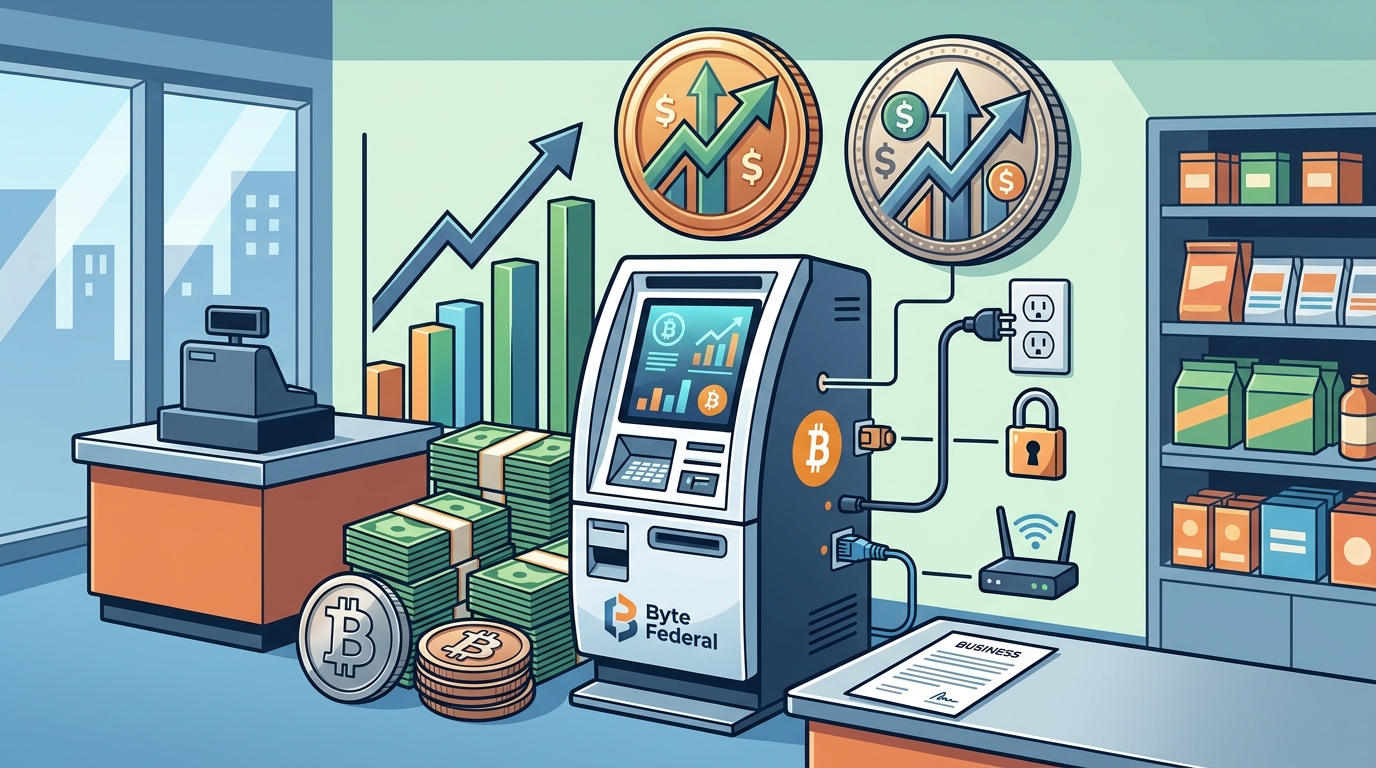
Compliance and Regulatory Requirements
Operating a Bitcoin ATM is not just a business decision. It is a legal one. Regulatory compliance is non-negotiable in the cryptocurrency space. Failure to comply can result in heavy fines or the revocation of your ability to operate.
FinCEN Registration is the first step in the United States. You must register as a Money Services Business (MSB) with the Financial Crimes Enforcement Network. This registration is free but mandatory. It establishes your legal standing to handle currency transmission.
State Money Transmitter Licenses are required in many states. Each state has its own application process, fees, and capital requirements. Some states, like New York, have the BitLicense, which is notoriously difficult and expensive to obtain. Other states have more streamlined processes. You must research the specific requirements for your state before installing a machine.
KYC/AML Policies are critical for risk management. Know Your Customer (KYC) and Anti-Money Laundering (AML) protocols must be integrated into the ATM software. This often involves identity verification for transactions above a certain threshold. Your ATM provider should handle the technical implementation, but you are responsible for ensuring the policies are enforced and documented.
Stay updated on regulatory changes by reading our industry insights blog, where we track compliance trends across different jurisdictions.
Key Takeaways
- Hosting Models Matter: Choose revenue-share for low risk or flat-fee for high volume potential.
- Location is Critical: High foot traffic and crypto-savvy demographics directly correlate with higher ROI.
- Compliance is Mandatory: Register as an MSB with FinCEN and secure necessary state licenses before installation.
- Hidden Costs Exist: Budget for cash handling, security upgrades, and transaction processing fees.
- ROI Timeline: Flat-fee models typically break even within 6 to 12 months in good locations.
- Revenue Sources: Primary income comes from buy/sell fees, with secondary income from advertising.
- ByteFederal Support: Partnering with an experienced provider reduces technical and compliance burdens significantly.
Frequently Asked Questions
How much does it cost to host a Bitcoin ATM?
Hosting costs vary by model. Revenue-share models have no upfront cost but take a percentage of revenue. Flat-fee leasing typically costs $100 to $300 per month, plus transaction fees. Purchasing a machine costs $3,000 to $10,000 upfront.
Is a Bitcoin ATM profitable for a small retail store?
Yes, if the location has sufficient foot traffic. Small stores in high-traffic areas can generate $500 to $1,500 in net monthly profit. The key is customer awareness and convenient placement.
Do I need a license to operate a Bitcoin ATM?
Yes. In the US, you must register as a Money Services Business with FinCEN. Many states also require a Money Transmitter License. Compliance is essential to avoid legal penalties.
How long does it take to break even?
In a flat-fee or purchase model, break-even typically occurs within 6 to 12 months, depending on transaction volume. Revenue-share models generate immediate cash flow but lower total returns.
What are the main risks of hosting a Bitcoin ATM?
Primary risks include regulatory changes, machine downtime, cash theft, and lower-than-expected transaction volumes. Partnering with a reliable provider like ByteFederal mitigates many technical and compliance risks.
Can I install a Bitcoin ATM in any store?
Technically, yes. However, profitability depends on location. Convenience stores, liquor stores, and money transfer centers are ideal. Residential or low-traffic areas are not recommended.
How does ByteFederal support its partners?
ByteFederal provides comprehensive support including hardware installation, software updates, compliance guidance, and 24/7 technical assistance. We help you navigate the complexities of crypto retail integration.
Start Your Bitcoin ATM Journey Today
Integrating a Bitcoin ATM into your retail business is a strategic move that can diversify revenue streams and attract a new customer base. With the right hosting model and location, the ROI can be substantial. Do not navigate the complex landscape of compliance and hardware selection alone. Partner with experts who understand the nuances of the crypto retail ecosystem.
Visit ByteFederal.com to explore our full range of ATM solutions and schedule a consultation with our team. We are ready to help you build a profitable, compliant, and future-proof cryptocurrency presence in your store.