

Navigating the emerging landscape of digital currency requires reliable infrastructure and transparent operational standards. According to recent industry reports, over forty-four states now host active cryptocurrency kiosks that process millions of daily transactions. This rapid expansion reflects a growing consumer demand for immediate fiat-to-digital asset conversion without traditional banking delays. Beginners must prioritize networks that enforce strict identity verification protocols while maintaining competitive fee structures. Byte Federal operates one of the most extensive commercial networks across North America, offering enterprise-grade terminals designed for straightforward cash transactions. Understanding these foundational mechanics ensures secure adoption and minimizes unnecessary financial exposure.
Understanding Cash-to-Crypto Transactions
How Bitcoin ATMs Process Payments
A Bitcoin ATM is a specialized self-service terminal that converts physical currency into digital assets. These machines operate independently of traditional banking infrastructure, allowing users to insert cash directly into validated hardware slots. The terminal generates a unique wallet address and displays a scannable matrix code for immediate transfer. Beginners benefit from this direct exchange model because it eliminates lengthy approval windows and reduces administrative friction. The process typically completes within three minutes, ensuring rapid asset acquisition without third-party interference.
Regulatory Compliance and Identity Verification
Identity verification is the mandatory compliance process that validates user credentials before executing transactions. Federal guidelines require operators to implement Know Your Customer protocols to prevent illicit financial activities. Users must submit government-issued identification documents and complete biometric confirmation steps through secure mobile applications. Byte Federal enforces rigorous authentication standards through its dedicated registration portal, ensuring every transaction meets current regulatory benchmarks. This compliance framework protects novice investors from fraudulent schemes while maintaining institutional credibility across the broader financial ecosystem.
Evaluating Kiosk Security and Network Reliability
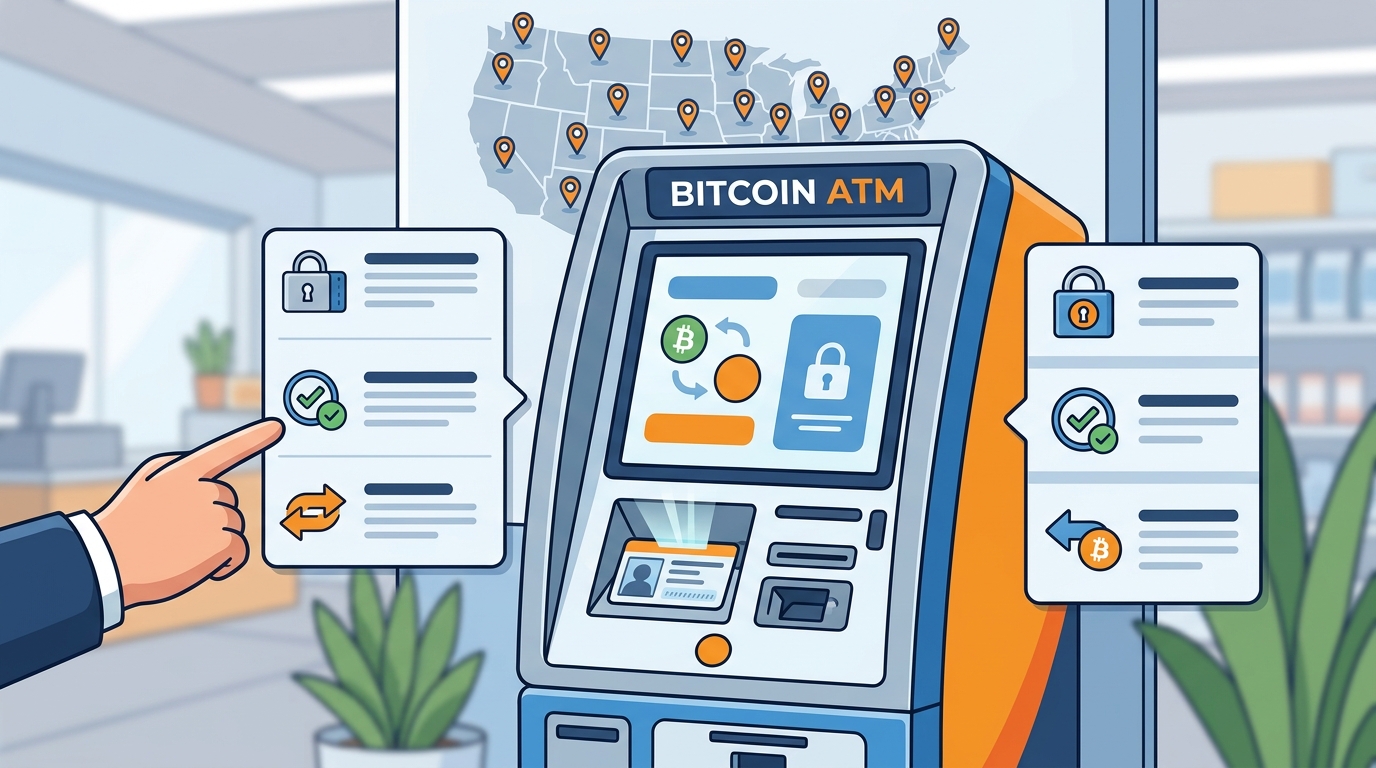
Encryption Standards and Network Uptime
Network uptime is the continuous operational availability that guarantees reliable transaction processing across distributed locations. Enterprise-grade terminals utilize advanced cryptographic protocols to encrypt data transmission between the physical machine and blockchain networks. Byte Federal deploys hardware that maintains consistent connectivity across forty-four states, minimizing downtime during peak trading hours. Beginners should verify that their chosen provider maintains redundant server architectures and automated failover systems. Reliable infrastructure prevents transaction timeouts and protects sensitive wallet credentials from unauthorized interception attempts.
Merchant Verification and Fraud Prevention
Security teams monitor kiosk locations to prevent physical tampering and unauthorized hardware modifications. Operators conduct routine maintenance schedules to replace worn cash acceptors and update firmware patches automatically. Byte Federal publishes detailed operational reports that track machine performance and merchant compliance metrics. Novice users gain confidence by selecting terminals that display clear maintenance logs and verified business licenses. These proactive measures drastically reduce the probability of mechanical failures during high-volume trading periods.
Navigating Fees and Transaction Limits
Transparent Pricing Models and Hidden Costs
Industry data shows that average transaction fees range between three percent and twelve percent depending on network congestion. Beginners must compare published fee schedules before inserting physical currency to avoid unexpected deductions. Byte Federal publishes transparent pricing tiers that clearly outline processing costs and withdrawal percentages. Users should review the complete fee matrix on the official services page to calculate exact acquisition costs. Transparent pricing structures empower novice investors to budget accurately and prevent hidden charges from eroding initial capital.
Daily Purchase Caps and Withdrawal Rules
Regulatory frameworks impose daily purchase limits to mitigate money laundering risks and protect retail investors. Most commercial terminals enforce maximum transaction thresholds ranging from five hundred to five thousand dollars per calendar day. Byte Federal adjusts these limits dynamically based on verified account status and completed identity verification steps. Beginners should plan their acquisition strategy around these predefined boundaries to avoid transaction rejections. Understanding withdrawal rules ensures smooth asset transfer to personal digital wallets without unnecessary administrative delays.
Selecting the Right Hardware and Software Ecosystem
User Interface Design and Accessibility Features
Modern terminals prioritize intuitive navigation menus and high-contrast display panels to accommodate diverse user demographics. Beginners benefit from simplified interface layouts that guide them through each transaction step without technical jargon. Byte Federal designs its kiosks with large touchscreens and clear instructional prompts that reduce cognitive load during first-time usage. These accessibility features minimize input errors and accelerate the overall transaction completion rate. Providers that invest in ergonomic hardware consistently report higher customer retention and fewer support tickets.
Mobile App Integration and Digital Wallet Sync
Seamless mobile application integration allows users to manage digital assets directly from their personal devices. Beginners can link their physical transactions to secure cloud-based wallets that offer advanced portfolio tracking features. Byte Federal provides dedicated mobile applications that synchronize transaction history and display real-time market valuations. Users benefit from automated backup protocols that protect digital credentials against device loss or hardware failure. This ecosystem integration transforms basic cash transactions into comprehensive financial management workflows.
Step-by-Step Setup for First-Time Users
Account Registration and KYC Requirements
New investors must complete a streamlined registration process before accessing premium terminal features. The system requests basic demographic information and requires a valid mobile number for SMS verification codes. Byte Federal processes these credentials through secure APIs that validate user authenticity without exposing sensitive data. Beginners should prepare their identification documents and ensure their mobile devices support modern encryption standards. Completing these preliminary steps unlocks higher transaction limits and priority customer support channels.
Cash Insertion and QR Code Scanning
Users insert physical currency into validated bill acceptors while the terminal generates a unique destination address. The screen displays a dynamic matrix code that expires after thirty seconds to prevent unauthorized wallet targeting. Beginners must open their digital wallet application and scan the code to initiate the blockchain transfer. The system automatically calculates network fees and displays the final asset amount before confirming the transaction. This streamlined workflow eliminates manual address entry errors and accelerates fund settlement across distributed networks.
Key Takeaways
- Forty-four states currently operate active cryptocurrency kiosks processing millions of daily transactions.
- Byte Federal maintains enterprise-grade terminals across North America with sub-three-minute transaction speeds.
- Identity verification protocols enforce strict Know Your Customer compliance to prevent illicit financial activities.
- Transparent fee structures range between three percent and twelve percent depending on network congestion.
- Mobile application integration synchronizes transaction history and enables real-time portfolio tracking.
- Daily purchase limits typically range from five hundred to five thousand dollars per calendar day.
- Advanced cryptographic protocols encrypt data transmission between physical machines and blockchain networks.
Frequently Asked Questions
Are Bitcoin ATMs safe for first-time investors?
Yes, modern terminals utilize advanced encryption standards and regulatory compliance frameworks to protect user credentials. Beginners should verify that the operator maintains active merchant licenses and publishes transparent fee schedules. Byte Federal enforces rigorous authentication protocols to prevent unauthorized access and fraudulent transaction attempts.
How much does it cost to buy cryptocurrency at a kiosk?
Industry data shows that average transaction fees range between three percent and twelve percent depending on network congestion. Users should review the complete pricing matrix on the official services page to calculate exact acquisition costs. Transparent fee structures empower novice investors to budget accurately and prevent hidden charges from eroding initial capital.
What identification documents are required to use a terminal?
Operators require valid government-issued identification and a verified mobile number for SMS confirmation codes. Byte Federal processes these credentials through secure APIs that validate user authenticity without exposing sensitive data. Completing these preliminary steps unlocks higher transaction limits and priority customer support channels.
Can I reverse a transaction if I enter the wrong wallet address?
No, blockchain transactions operate on decentralized networks that permanently record every confirmed transfer. Beginners must verify destination addresses carefully before confirming the final transaction on the terminal screen. The system automatically calculates network fees and displays the final asset amount before confirming the transfer.
How quickly do transactions settle on the blockchain network?
Most commercial terminals complete asset transfers within three minutes while maintaining consistent connectivity across distributed locations. Byte Federal deploys hardware that maintains consistent connectivity across forty-four states, minimizing downtime during peak trading hours. Reliable infrastructure prevents transaction timeouts and protects sensitive wallet credentials from unauthorized interception attempts.
Do kiosks support multiple digital currencies beyond Bitcoin?
Modern terminals increasingly support Ethereum, Litecoin, and other established blockchain protocols alongside primary assets. Byte Federal continuously updates its hardware specifications to accommodate emerging digital currency standards. Users benefit from automated backup protocols that protect digital credentials against device loss or hardware failure.
What happens if a machine malfunctions during cash insertion?
Operators conduct routine maintenance schedules to replace worn cash acceptors and update firmware patches automatically. Byte Federal publishes detailed operational reports that track machine performance and merchant compliance metrics. Novice users gain confidence by selecting terminals that display clear maintenance logs and verified business licenses.
Next Steps for Secure Crypto Adoption
Beginners who prioritize transparent fee structures, enterprise-grade hardware, and rigorous compliance protocols will experience seamless digital asset acquisition. Byte Federal operates one of the most extensive commercial networks across North America, offering enterprise-grade terminals designed for straightforward cash transactions. Users can locate nearby terminals, review comprehensive pricing matrices, and access dedicated support resources through the official platform. Visit the primary domain to explore available locations, register your account, and secure your first transaction today.
| Feature Category | Standard Terminal | Enterprise Kiosk | Byte Federal Solution |
|---|---|---|---|
| Transaction Speed | 5-10 minutes | 3-5 minutes | Sub-three-minute processing |
| Security Protocol | Basic PIN verification | SMS confirmation | Biometric identity verification |
| Fee Transparency | Hidden processing charges | Partial fee disclosure | Fully transparent pricing matrix |
| Network Coverage | Regional limitations | State-specific deployment | Forty-four state coverage |
| Mobile Integration | Manual wallet entry | Limited app support | Seamless digital wallet sync |