

Adopting cryptocurrency is no longer just a speculative trend for tech startups. According to recent industry data, over 60% of small businesses in the United States are now exploring or actively implementing digital asset payment solutions to capture a broader customer base. This shift is driven by the desire to reduce transaction fees, eliminate chargeback fraud, and appeal to a demographic that values financial sovereignty. For small business owners, the barrier to entry has never been lower, thanks to streamlined APIs and self-service kiosks that handle the complex cryptographic verification in the background. (About Byte Federal American)
Understanding the Basics of Crypto Payments
Before diving into technical integrations, it is essential to define the core mechanisms at play. Cryptocurrency is a digital or virtual form of currency that uses cryptography for security. Unlike traditional fiat money, it operates on decentralized networks based on blockchain technology. This decentralization means that transactions are verified by network nodes through cryptography and recorded in a public distributed ledger.
For a small business, the primary benefit is the elimination of intermediaries. Traditional payment processors like banks and credit card networks charge significant fees, often between 2% and 3.5% per transaction. By accepting digital currency, merchants can bypass these middlemen, retaining more of their revenue. Furthermore, the immutable nature of the blockchain ensures that once a payment is confirmed, it cannot be reversed, effectively eradicating the risk of fraudulent chargebacks that plague e-commerce and retail sectors.
Another critical concept is self-sovereign identity, which allows users to control their own financial data without relying on centralized authorities. This aligns with the growing consumer demand for privacy and autonomy in financial transactions. Businesses that embrace this paradigm position themselves as forward-thinking and customer-centric, appealing to a tech-savvy demographic that values these principles.
Choosing Your Payment Method
Small businesses have several avenues for accepting digital currency, each with distinct operational implications. The choice depends on your business model, whether you are primarily online, brick-and-mortar, or a hybrid.
Point of Sale (POS) Systems
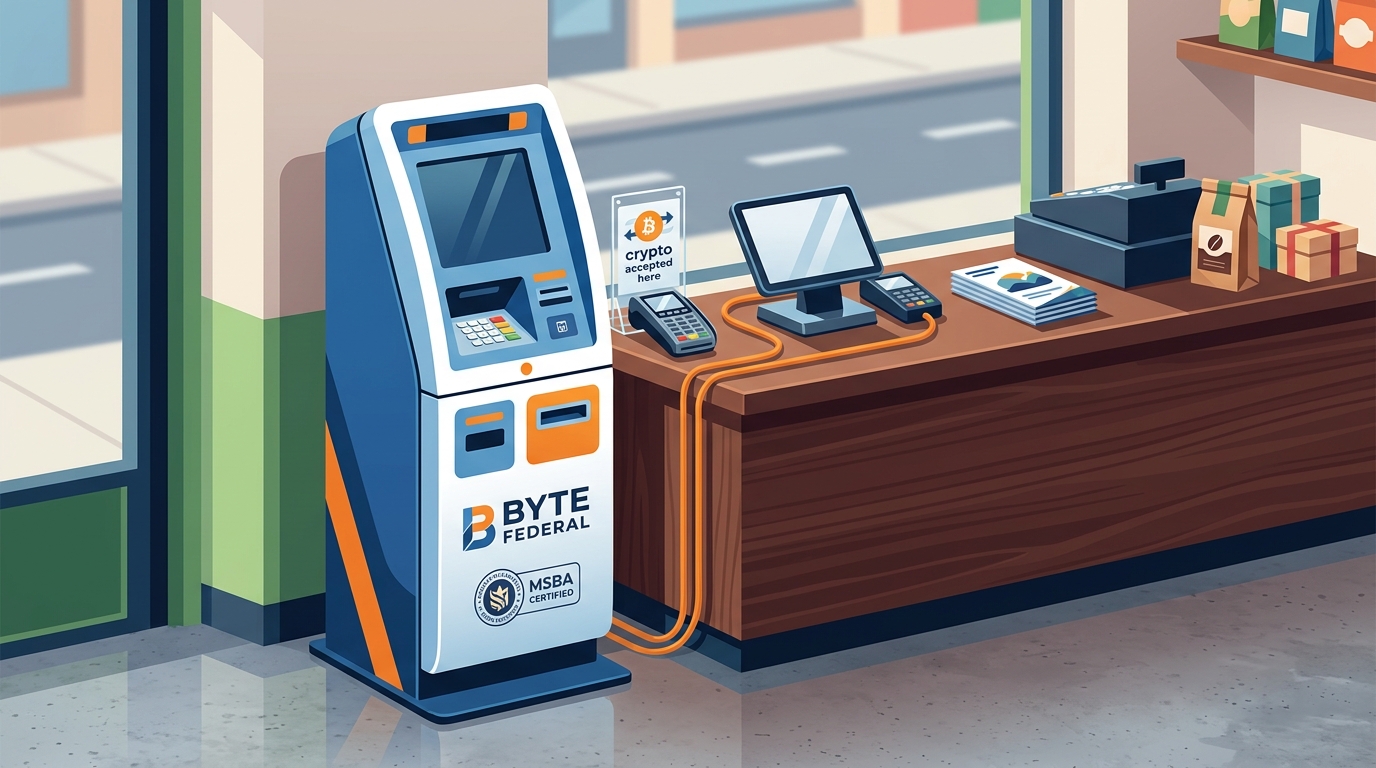
For physical retail locations, integrating a crypto-enabled POS system is the most seamless approach. These systems allow you to accept Bitcoin, Ethereum, and other major assets directly at the checkout counter. The transaction is processed instantly, and the funds are settled into your digital wallet. This method is ideal for cafes, retail stores, and service providers who want to offer a modern payment option without disrupting their existing workflow.
Bitcoin ATMs and Kiosks
If your business involves hardware sales or you operate in a high-traffic area, deploying a Bitcoin ATM or kiosk can be a lucrative addition. These machines allow customers to buy crypto with cash, but they also serve as a marketing touchpoint. Byte Federal, for instance, offers a network of over 1,000 ATMs across the USA, providing a platform for kiosk advertising that reaches millions of monthly recurring users. This not only facilitates crypto transactions but also opens a new revenue stream through targeted advertising.
API Integration for E-Commerce
Online businesses benefit most from direct API integration. This allows for real-time conversion of crypto to fiat, protecting your business from market volatility. By connecting your e-commerce platform to a payment gateway, you can accept payments directly into your bank account, simplifying accounting and tax reporting. This method is particularly effective for SaaS providers and digital service firms.
Integration Steps for Merchants
Implementing crypto payments requires a structured approach to ensure security and compliance. Here is a step-by-step guide to getting started.
Step 1: Select a Payment Processor
The first step is choosing a reliable payment processor that aligns with your business needs. Look for providers that offer robust security features, such as passwordless authentication powered by Bitcoin cryptography. This ensures that your business accounts and customer data are protected against credential stuffing attacks, which account for a significant portion of security breaches. A provider like Byte Federal offers enterprise-grade solutions that integrate seamlessly with existing systems.
Step 2: Set Up Your Wallet
You will need a secure digital wallet to store the funds you receive. This can be a hot wallet for daily transactions or a cold wallet for long-term storage. Ensure that your wallet supports the specific cryptocurrencies you wish to accept. Many processors offer built-in wallet solutions that simplify this process.
Step 3: Configure Your Payment Gateway
Integrate the payment gateway with your POS or e-commerce platform. This involves configuring API keys and setting up automatic conversion rules if you prefer to receive fiat currency. Test the integration thoroughly to ensure that transactions are processed correctly and that the user experience is smooth.
Step 4: Train Your Staff
Educate your employees on how to handle crypto transactions. They should understand the basics of digital currency, how to process payments, and how to address common customer questions. This ensures that your team can provide excellent customer service and maintain trust in your new payment system.
Step 5: Market Your New Capability
Once your system is live, promote your ability to accept digital currency. Use your website, social media, and in-store signage to inform customers. Highlight the benefits, such as lower prices due to reduced fees or faster transaction times. This can attract new customers who prefer using crypto.
Comparing Payment Options
Choosing the right method depends on your specific business requirements. The table below summarizes the key options available to small businesses.
| Method | Best For | Key Benefit | Cost Structure |
|---|---|---|---|
| POS Systems | Brick-and-Mortar Retail | Instant Settlement | Transaction Fee |
| Bitcoin ATMs | High-Traffic Locations | Advertising Revenue | Monthly Lease |
| API Integration | E-Commerce | Automation | Per Transaction |
| ByteAuth | Security Focus | Passwordless Login | Subscription |
Each option offers distinct advantages. POS systems are ideal for immediate cash flow, while Bitcoin ATMs can generate additional revenue through advertising. API integration provides the most flexibility for online businesses, and advanced security tools like ByteAuth ensure that your authentication processes are robust and user-friendly.
Key Takeaways
- Adoption Growth: Over 60% of small businesses are now exploring crypto payments to reduce costs and attract new customers.
- Fee Reduction: Crypto transactions can eliminate the 2-3.5% fees associated with traditional credit card processing.
- Security: Implementing passwordless authentication powered by Bitcoin cryptography can significantly reduce the risk of credential stuffing attacks.
- Advertising Revenue: Deploying Bitcoin ATMs can open a new revenue stream through kiosk advertising, reaching millions of users.
- Integration Ease: Modern APIs allow for seamless integration with existing e-commerce platforms, enabling real-time conversion to fiat.
- Customer Appeal: Accepting digital currency appeals to a tech-savvy demographic that values financial sovereignty and privacy.
- Compliance: Ensure your chosen provider offers robust compliance tools to navigate the evolving regulatory landscape.
Frequently Asked Questions
Is it legal for small businesses to accept cryptocurrency?
Yes, it is legal for small businesses to accept cryptocurrency in most jurisdictions, including the United States. However, businesses must comply with local regulations regarding money transmission and tax reporting.
How do I handle the volatility of cryptocurrency prices?
Many payment processors offer automatic conversion services that instantly convert crypto payments into fiat currency, protecting your business from market fluctuations.
What are the tax implications of accepting crypto?
In the US, cryptocurrency is treated as property for tax purposes. Businesses must report the fair market value of the crypto at the time of the transaction as income.
Can I accept crypto without having a technical background?
Yes, many providers offer user-friendly POS systems and APIs that require minimal technical knowledge. They handle the complex cryptographic processes in the background.
How can I promote my ability to accept digital currency?
You can promote your crypto acceptance through social media, in-store signage, and your website. Highlighting the benefits, such as lower prices or faster transactions, can attract new customers.
What security measures should I implement?
Implement passwordless authentication and use secure, encrypted wallets. Regularly update your software and monitor for suspicious activity to protect your business and customer data.
Are there any monthly fees for accepting crypto?
Costs vary by provider. Some charge a monthly subscription, while others operate on a per-transaction fee model. It is important to compare options to find the best fit for your business.
How do customers pay with cryptocurrency?
Customers can pay by scanning a QR code with their digital wallet app. The transaction is then verified on the blockchain and confirmed to the merchant.
Get Started Today
Ready to revolutionize your payment processing? Join the growing network of small businesses leveraging the power of digital currency. Visit Byte Federal to explore our comprehensive suite of crypto solutions, from POS systems to API integrations. Start accepting digital payments securely and efficiently today.