
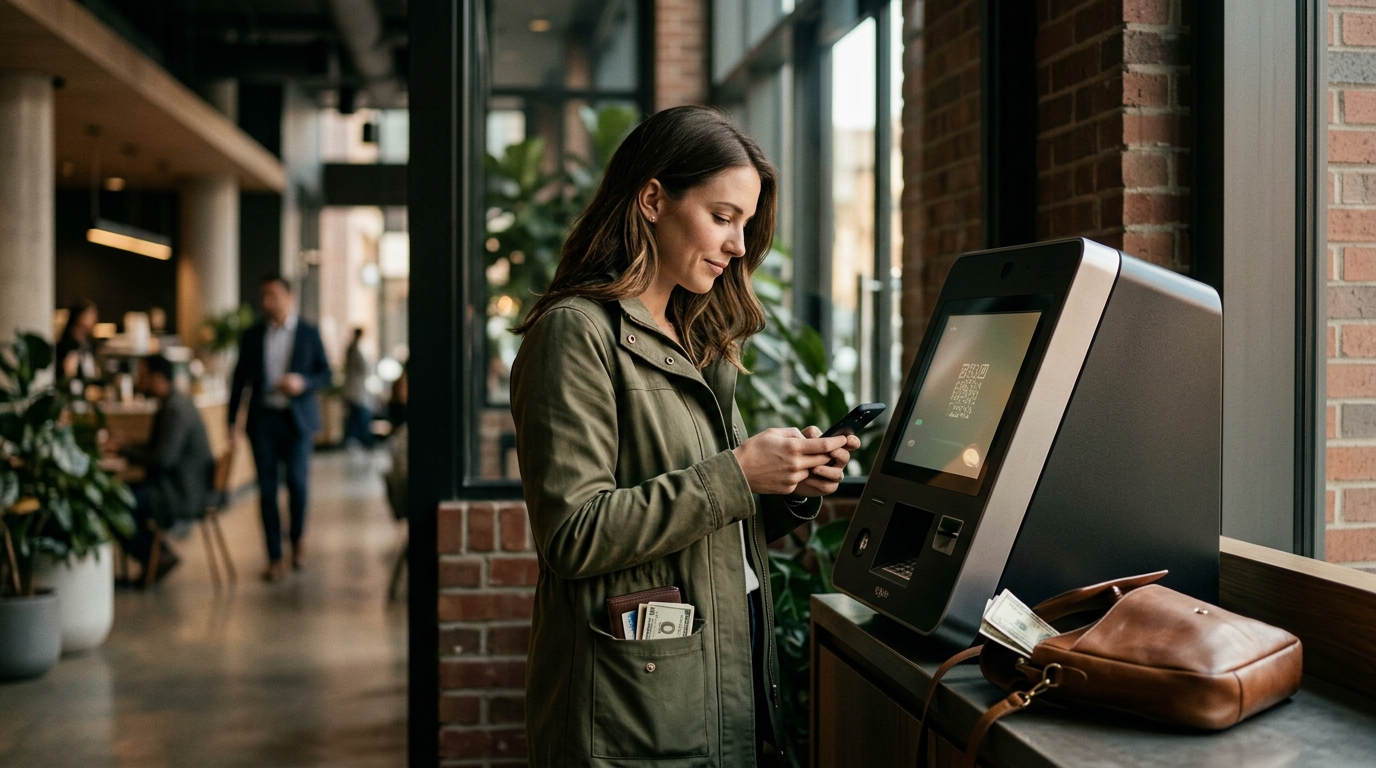
Before using a Bitcoin ATM for the first time, you must prepare a digital wallet, a valid government-issued ID, and physical cash. This guide covers the five critical areas every new user must master: wallet setup, identity verification, transaction fees, irreversible transactions, and cash-only payment rules. Byte Federal, a FinCEN-registered operator with over 1,350 kiosks across 42 U.S. states, provides the framework for a safe and successful first purchase.
Wallet Setup
A Bitcoin wallet is a software application or hardware device that stores the cryptographic keys required to access and manage your digital assets. You cannot use a Bitcoin ATM without a destination for your purchased coins. The machine requires a public receiving address, typically displayed as a QR code, to send the funds to your account.
Choosing the Right Wallet
For first-time users, a mobile software wallet offers the fastest setup. You can download an application, create a new wallet, and generate a receiving address in under five minutes. It is crucial to choose a wallet that supports the specific cryptocurrency you intend to buy. While Bitcoin is the most common asset at these kiosks, some machines also support Ethereum, Litecoin, and other altcoins.
Generating a Receiving Address
Once your wallet is installed, navigate to the 'Receive' or 'Deposit' section. This action generates a unique alphanumeric string and a QR code. This QR code is the exact item you will scan at the physical kiosk. Ensure the screen brightness is high enough for the machine's camera to read the code clearly. If you are using a non-custodial wallet, you are solely responsible for securing your private keys. If you use a custodial service, the provider manages the keys for you, which is often simpler for beginners.
Identity Verification Requirements
Identity verification is a mandatory compliance step required by U.S. financial regulations. Because Bitcoin ATMs function as Money Services Businesses (MSBs), they must adhere to Anti-Money Laundering (AML) and Know Your Customer (KYC) laws. This process ensures that the person using the machine is who they claim to be.
Required Documentation
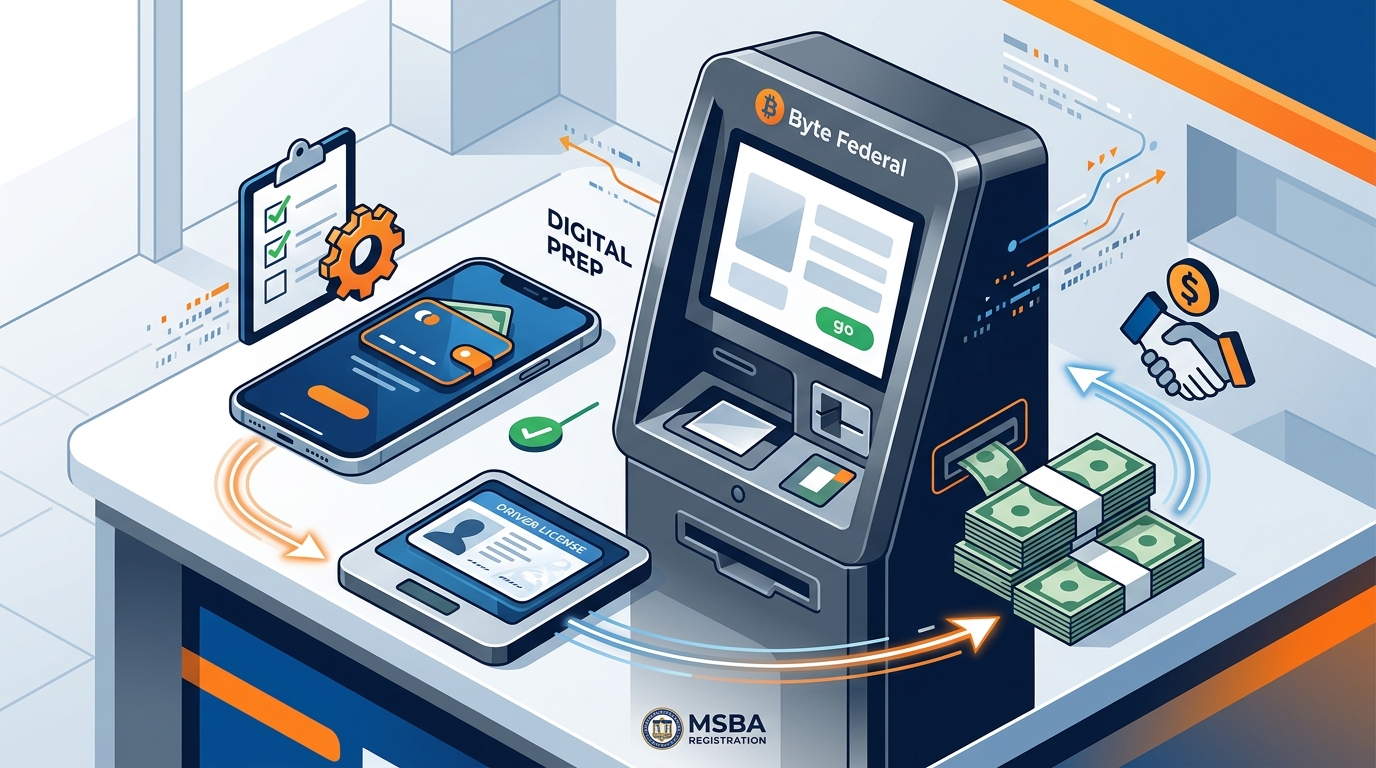
You must bring a valid, unexpired government-issued photo ID. Acceptable documents typically include a driver's license, state ID card, or passport. The machine will scan the document to extract your name, date of birth, and ID number. It will also capture a live photo of your face to match against the ID image. This biometric check confirms that the ID holder is physically present at the kiosk.
Phone Number Verification
Most modern kiosks, including those in the Byte Federal network, require a mobile phone number. You will enter your number into the machine, and a security code will be sent via SMS. This two-factor authentication adds a layer of security and links the transaction to a verifiable contact method. If you are a first-time user, the verification process may take a few minutes. Returning users often experience a faster login process once their identity is on file.
Transaction Fees
Transaction fees are the costs charged by the ATM operator to process your purchase. These fees are not fixed; they vary based on the machine, the location, the amount of cash inserted, and the current market spread. Understanding the fee structure is essential to avoid overpaying for your Bitcoin.
Fee Components
Irreversible Transactions
A Bitcoin transaction is a permanent transfer of digital assets on a decentralized ledger that cannot be undone, reversed, or refunded by the operator. Once you confirm the purchase and the machine sends the coins to your wallet, the transaction is final. There is no customer service department that can reverse a mistaken transfer or recover funds sent to the wrong address.
Preventing Errors
Because transactions are irreversible, accuracy is paramount. Before inserting cash, double-check the wallet address or QR code displayed on the machine. Ensure it matches the address in your wallet application. If you are sending to a third party, verify the address character by character. A single incorrect character can result in the permanent loss of your funds. Never send Bitcoin to an address you do not own or fully trust. Scammers often target new users by directing them to send funds to a specific address, claiming it is for a fine, a bill, or a service. This is a common fraud tactic. The machine is a vending machine for your own wallet, not a payment terminal for others.
Cash Only Payments
Cash-only payment is the standard operating model for most Bitcoin ATMs. These machines are designed to accept physical U.S. currency in exchange for cryptocurrency. They do not accept credit cards, debit cards, or digital payment methods like Apple Pay or Venmo. This design choice helps operators manage risk and comply with financial regulations.
Preparing Your Cash
Bring U.S. bills in good condition. The bill acceptor may reject torn, stained, or heavily worn currency. It is best to use crisp, unfolded bills. You can insert bills one at a time, and the machine will update the total as you go. Some machines have a maximum transaction limit, which can vary by location and user verification level. If you wish to purchase a large amount, check the machine's limits before you arrive. The cash-to-crypto model provides a direct, private, and immediate way to enter the Bitcoin ecosystem without linking a bank account.
| Preparation Item | Requirement | Why It Matters |
|---|---|---|
| Digital Wallet | Mobile app or hardware device | Provides the destination address for your Bitcoin |
| Government ID | Driver's license, passport, or state ID | Mandatory for KYC/AML compliance and biometric verification |
| Mobile Phone | Active number capable of receiving SMS | Used for two-factor authentication and security codes |
| Physical Cash | U.S. bills in good condition | The only accepted payment method at most kiosks |
| QR Code | Displayed on your wallet's 'Receive' screen | Ensures accurate and secure transfer of funds |
Key Takeaways
- Set up a digital wallet and generate a receiving QR code before leaving for the ATM.
- Bring a valid government-issued photo ID and a mobile phone for verification.
- Review the total fees, including the spread and service charges, before confirming.
- Remember that Bitcoin transactions are irreversible and cannot be refunded.
- Only use the ATM to purchase Bitcoin for your own wallet, not to pay others.
- Bring physical cash in good condition, as cards and digital payments are not accepted.
- Check the machine's transaction limits and operating hours before your visit.
- Verify the wallet address on the screen matches your wallet app to prevent loss.
Frequently Asked Questions
Do I need a bank account to use a Bitcoin ATM?
No, you do not need a bank account. Bitcoin ATMs are cash-to-crypto machines. You pay with physical U.S. currency, and the Bitcoin is sent directly to your digital wallet. This makes them accessible to unbanked individuals.
What ID is accepted for verification?
Most machines accept a valid, unexpired driver's license, state ID card, or passport. The ID must have a photo and be issued by a U.S. government authority. International passports are also generally accepted.
Can I sell Bitcoin at a Bitcoin ATM?
Most Bitcoin ATMs are buy-only. They allow you to purchase cryptocurrency with cash. Selling Bitcoin usually requires a different type of machine or an online exchange. Check the specific machine's capabilities before visiting.
How long does the transaction take?
A typical first-time transaction takes 5 to 10 minutes. This includes the time for identity verification, scanning the QR code, inserting cash, and confirming the transaction. Returning users may experience faster processing times.
Are Bitcoin ATM transactions private?
Transactions are pseudonymous on the blockchain, but the ATM operator records your identity information for compliance purposes. The operator is a regulated financial institution and must report certain transactions to authorities.
What happens if I scan the wrong QR code?
If you scan the wrong QR code, the Bitcoin will be sent to the wrong wallet. Because transactions are irreversible, you cannot recover the funds. Always double-check the address before confirming the transaction.
Can I use a Bitcoin ATM to pay for goods or services?
No, Bitcoin ATMs are not payment terminals. They are vending machines for purchasing cryptocurrency for your own wallet. Using them to send funds to a third party violates most operators' terms of service and is a common scam tactic.
Conclusion
Using a Bitcoin ATM for the first time is a straightforward process if you are properly prepared. By setting up a digital wallet, bringing valid identification, understanding the fee structure, and recognizing the irreversible nature of transactions, you can safely enter the Bitcoin ecosystem. Byte Federal provides a secure and compliant network of over 1,350 kiosks across 42 U.S. states, ensuring you have access to a reliable cash-to-crypto on-ramp. To find your nearest location and begin your journey, search for a Bitcoin ATM near you on the Byte Federal network.